
Spanish CRM for Cleaners That Gets Used
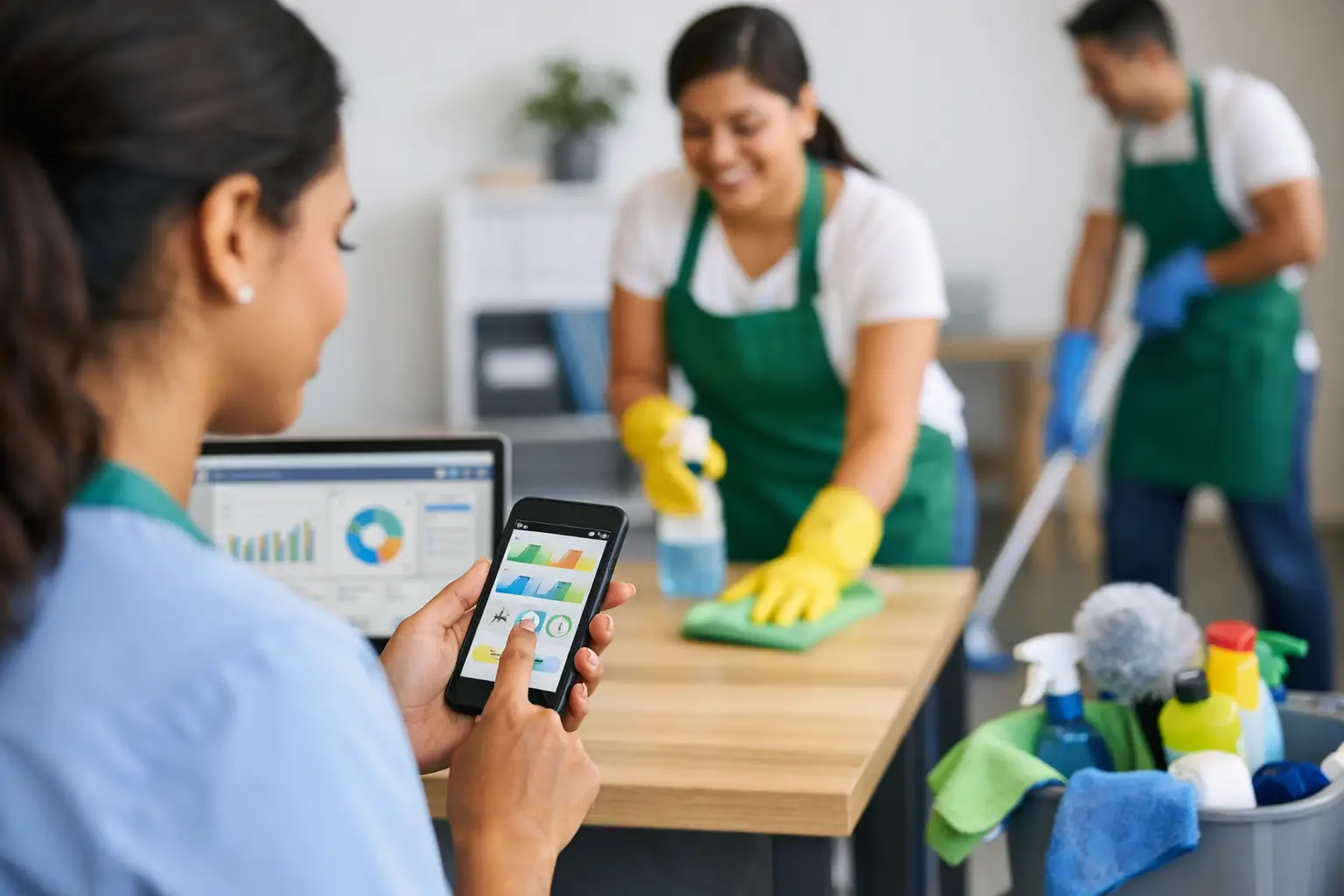
A missed cleaning lead usually does not happen because you are bad at sales. It happens because you are in a bathroom scrubbing tile, your phone rings, a Thumbtack message comes in, and the customer books someone else before you clock out. That is exactly where a spanish crm for cleaners matters - not as fancy software, but as a way to answer faster, stay organized, and keep jobs from slipping through the cracks.
What a spanish crm for cleaners should actually solve
Most cleaners do not need a huge office system with ten menus and a long training course. They need one place to see new leads, answer quickly in Spanish or English, and keep track of who asked for a quote, who booked, and who never replied.
That sounds simple, but a lot of CRMs miss the point for small cleaning businesses. They were built for larger teams, desk workers, or industries with long sales cycles. A solo cleaner or a small crew needs something mobile-first, fast, and easy to use between jobs.
If the software is only available in English, that adds even more friction. You should not have to translate every button in your head while also trying to quote a deep clean. A true spanish crm for cleaners should let you run the business in the language you are most comfortable using, without slowing you down.
Why language support is not a small feature
For Spanish-first cleaning business owners in the US, language is not just a preference. It affects speed, confidence, and follow-through.
When your dashboard, messages, call notes, and replies are all in a language that feels natural, you move faster. You are less likely to miss details, send the wrong message, or avoid using the tool altogether. That last point matters more than people admit. Plenty of software looks good in a demo and then gets ignored because it feels like extra work.
A bilingual setup also helps on the customer side. Some customers want to communicate in English, some in Spanish, and some switch between both. If your system can support that without making you copy, paste, and translate everything manually, you save time and look more professional.
The real cost of using the wrong CRM
A bad CRM does not always fail in an obvious way. Sometimes it technically works, but it creates just enough friction that you stop using it.
Maybe new leads from Yelp land in one app, texts in another, calls on your personal phone, and website forms in your email. Maybe you still write appointments in a notebook because the calendar feels confusing. Maybe you mean to follow up, but by the time you get home, the lead is cold.
That is not a software problem on paper. It is an operations problem in real life.
For cleaners, the wrong system usually shows up in four places: slow replies, missed follow-up, no clear view of booked jobs, and no easy way to tell which lead sources are worth paying for. If you cannot see what came in, what got answered, and what turned into revenue, it is hard to grow on purpose.
What to look for in a spanish crm for cleaners
Start with the basics. Can you see all your leads in one inbox, whether they came from a lead marketplace, text message, phone call, or form? If not, you are still piecing the business together manually.
Next, look at response speed. Cleaners do not always lose leads because of price. They lose them because someone else answered first. A good CRM should make it easy to reply right away, and if it offers instant replies, those replies need to sound natural in both English and Spanish.
Scheduling matters too. If your CRM helps qualify the lead and get the job onto the calendar quickly, it saves back-and-forth. For a small cleaning business, fewer steps usually means more booked jobs.
Then there is setup. This part gets overlooked, but it should not. If the platform takes weeks to configure or expects you to learn like an office admin, it is probably not built for your day-to-day reality. The best tool for a cleaner is the one you can start using without a long learning curve.
Features that matter more than a long feature list
A lot of software sells itself with dozens of features. For most cleaners, only a few truly move the needle.
Unified lead capture is one. If calls, texts, marketplace leads, and web inquiries all show up in one place, you spend less time checking apps and more time closing jobs.
Fast bilingual communication is another. If a customer messages in Spanish, you should be able to answer in Spanish right away. If they call in English, that should not create a second workflow. The less switching you do, the smoother your day runs.
Public web presence also matters, especially for cleaners who do not want to build a full website. A simple profile that customers can find, share, and contact is often enough to capture leads without creating another project for you.
And do not ignore offline marketing. If you hand out cards, leave flyers, or use van magnets, a QR code tied to your business profile can turn that attention into actual inquiries instead of hoping people remember your number.
Where AI helps and where it can get in the way
AI can be useful for cleaners, but only when it removes real work.
Instant replies can help when you are on a job and cannot answer immediately. AI call answering can help after hours or during busy days, especially if it qualifies the lead and helps book the appointment. Call summaries can save time if you do not want to replay voicemails while driving home.
But there is a trade-off. If the replies sound robotic, ask the wrong questions, or create extra cleanup later, the tool becomes another problem to manage. AI should support your workflow, not force you to babysit it.
That is why simplicity matters more than hype. A cleaner does not need AI because it sounds modern. They need it if it helps them catch more leads without adding admin work.
Why small cleaning businesses need support, not just software
Most solo operators are not looking for a new system because they love software. They are looking because they are losing jobs and do not have time to fix the process alone.
That is why onboarding matters so much. Written help docs are fine for some people, but many cleaners would rather watch a short screen recording that shows exactly what to tap and what to say. Quick, personalized guidance beats a 40-page manual every time.
This is where some platforms separate themselves. A bilingual tool with hands-on setup can get adopted much faster than a more powerful system that leaves you to figure everything out. If you can text, you should be able to use your CRM. That should be the standard.
Is a spanish crm for cleaners worth it if you are a solo operator?
Usually, yes - if the system helps you book even a few more jobs each month.
The math is not complicated. One missed recurring customer can cost far more than the monthly price of a simple CRM. But it still depends on how you get business today. If most of your work comes from long-term repeat clients and referrals, you may not need an advanced setup. If you rely on Thumbtack, Angi, Yelp, Google leads, calls, and text inquiries, you probably do.
The key question is not whether you are big enough for a CRM. It is whether your current process is causing missed revenue. If the answer is yes, then a CRM is not about looking professional. It is about running tighter operations.
A practical benchmark for choosing one
Before you pick any system, ask three simple questions. Can I answer leads faster with this than I do now? Can I use it comfortably in Spanish and English? Will I actually keep using it when I am busy?
If the answer to any of those is no, keep looking.
A platform like GigConvert makes sense for cleaners who need bilingual lead capture, faster response times, and a simple way to manage calls, texts, and bookings without building a whole website or learning complicated software. That is a practical fit for the way many small cleaning businesses already work.
The right CRM should feel like less work on your busiest day, not more. If it helps you respond while you are still out in the field and keeps good leads from going cold, that is not just software. That is time back, stress down, and more booked jobs.