
Best Software for Solo Cleaning Business
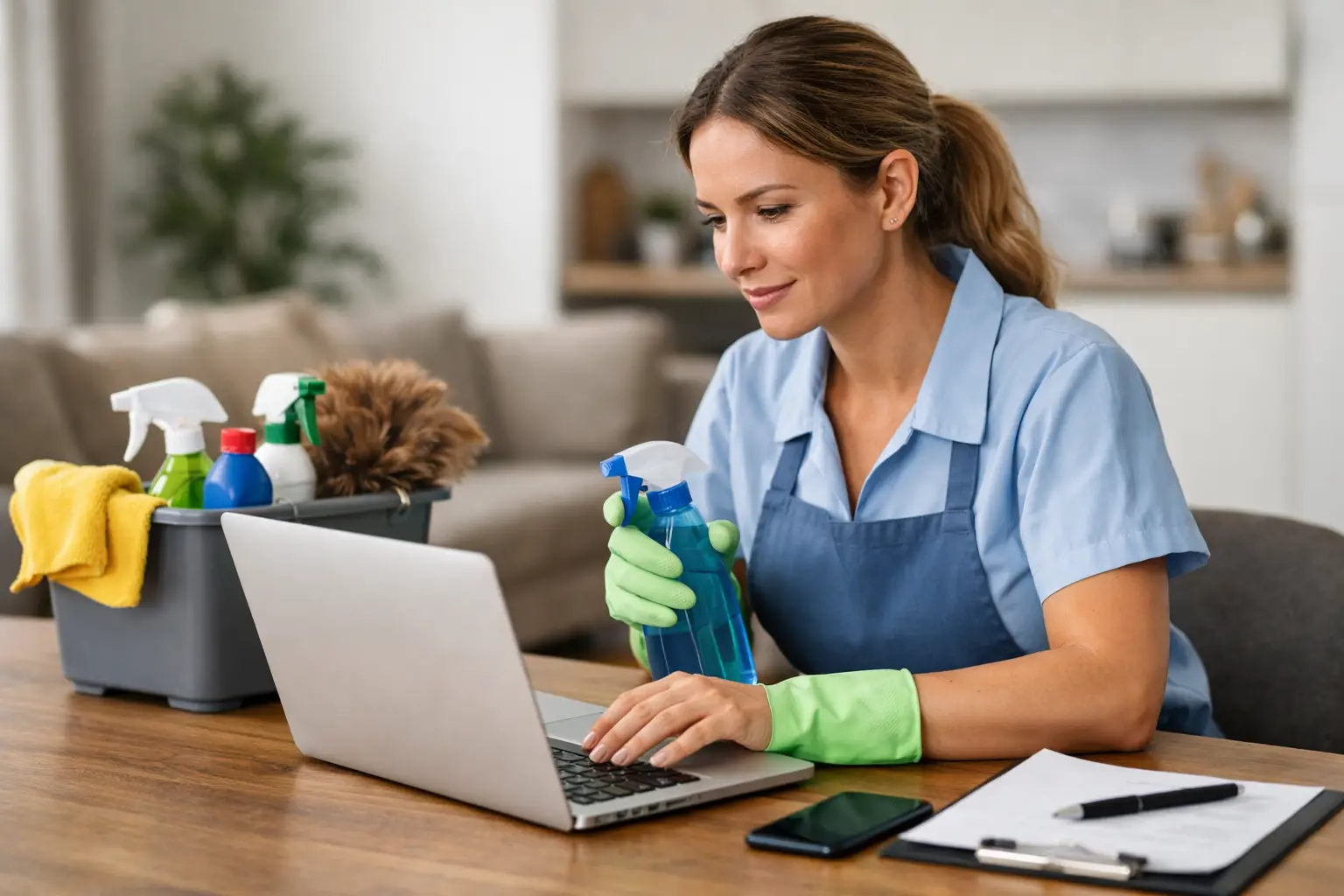
You finish a house cleaning, check your phone, and realize two leads came in an hour ago. One wanted a deep clean this week. The other asked for recurring service. Neither got a reply. That is exactly where software for solo cleaning business owners either earns its keep or becomes one more thing to ignore.
If you work alone or with a very small crew, you do not need a giant system built for office staff, dispatch teams, and five managers. You need something that helps you answer faster, stay organized from your phone, and book more jobs without adding admin time. The right software should feel like help, not homework.
What software for solo cleaning business owners should actually do
Most solo cleaners are not losing jobs because they cannot clean well. They are losing jobs because leads slip through the cracks, follow-up is inconsistent, and scheduling lives in three different places. A notes app, text messages, a paper calendar, and a marketplace inbox can work for a while, until they do not.
Good software fixes the basic operational problems first. It should keep your leads in one place, help you reply quickly, let customers request service without friction, and make it easy to see what is booked next. If it also helps with estimates, payment tracking, and repeat customer follow-up, even better.
The trap is buying software with too many features and not enough usefulness. Solo operators rarely need layers of customization. They need speed, clarity, and mobile access. If you can only use the platform properly from a laptop at night, it is probably not a fit.
The biggest mistake when choosing cleaning business software
A lot of owners choose based on feature count. That sounds logical, but it usually backfires. More features often mean more setup, more tabs, and more things to learn when you are already busy.
A better question is this: what is slowing down booked jobs right now?
If your biggest problem is missed calls and slow replies, lead response matters more than advanced reporting. If your schedule is chaotic, calendar tools matter more than marketing add-ons. If customers speak both English and Spanish, bilingual communication is not a nice extra. It is central to getting the job.
That is why the best software for a solo cleaning business often looks simpler than what larger companies use. Simpler is not weaker. It is more usable.
The core tools that matter most
Lead capture and fast response
Speed matters more than most owners think. A lead from Thumbtack, Yelp, Google, text, or a phone call can go cold fast, especially in cleaning where customers often message multiple providers at once.
Your software should pull those conversations into one inbox or at least reduce the need to check five places. Even better if it can send an immediate reply, confirm service details, and keep the conversation moving while you are on a job. For a solo operator, that is not about automation for its own sake. It is about not losing work while your hands are full.
Simple scheduling
Your calendar should tell you what is happening at a glance. You should be able to book a one-time cleaning, estimate travel time, and see recurring jobs without clicking around for ten minutes.
Some scheduling tools are built for multi-crew dispatching. If you are solo, that can be overkill. Look for something that makes rescheduling easy and lets customers confirm details clearly. A clean, mobile-friendly calendar is usually better than a complex one with every option under the sun.
Customer communication
A lot of cleaning jobs are won or lost in the follow-up. Customers ask for pricing, timing, move-out availability, or whether you bring supplies. If your replies are late or inconsistent, conversion drops.
The right system helps you answer fast, keep message history in one place, and avoid rewriting the same response all day. If it supports both English and Spanish, that can remove a real barrier for owners and customers alike.
Basic business visibility
Many solo cleaners do not need a full traditional website right away. They do need a professional online presence they can share by text, social media, Google Business Profile, flyers, and business cards.
A simple public profile that shows services, service area, reviews, contact options, and a booking path can do the job. For some operators, that is more useful than paying for a website they never update.
What to skip, at least for now
You probably do not need advanced route optimization, warehouse inventory, payroll modules for a big staff, or deep accounting automation on day one. Those tools can make sense later, but they are not usually the reason a solo cleaner grows.
You also do not need software that takes weeks to configure. If setup feels heavy before you have even booked a job through it, there is a good chance adoption will stall. For most solo operators, easy onboarding matters more than perfect customization.
How to judge software in real life
The sales page is not the real test. The real test is whether the software works during a normal Tuesday when you are driving, cleaning, replying, and trying not to miss the next lead.
Ask practical questions. Can you use it from your phone? Can a new lead get a response quickly even when you are busy? Can you find old customer conversations without digging? Can you share your business information in one clean link or QR code? Can someone help you get set up without sending you into a maze of help docs?
Those details matter more than polished screenshots.
Why bilingual support can be a deciding factor
For many cleaning business owners, English-only software creates friction every day. That friction shows up in slower setup, missed features, weaker follow-up, and less confidence using the tool at all.
If you are Spanish-first or bilingual, software should meet you where you work. That includes the dashboard, customer messages, and phone communication. It is not just about convenience. It is about using the tool fully enough to make more money from it.
This is one reason platforms like GigConvert stand out for solo operators. The focus is not on stuffing in enterprise features. It is on helping small service businesses catch every lead, reply fast in English or Spanish, and get set up without technical stress.
A practical way to choose the best software for solo cleaning business growth
Start with one goal: book more jobs with less chasing.
Then look for software that covers four basics well. First, it should help you capture and answer leads fast. Second, it should make scheduling easy from your phone. Third, it should give you a professional presence you can share anywhere. Fourth, it should be simple enough that you will actually keep using it.
If a platform does those four things, it is already ahead of most tools marketed to small businesses.
Price matters, of course. But cheap software that costs you leads is expensive. On the other hand, expensive software that you never fully use is not a smart investment either. The middle ground is usually best: something affordable, focused, and easy to run without office staff.
Signs you have found the right fit
You know the software is working when your day feels lighter, not busier. Leads get answered faster. Fewer messages get buried. Customers stop asking basic questions you already answered elsewhere. Booking starts to feel more predictable.
You should also notice clearer decision-making. Which lead sources are worth your time? Which customers turn into recurring jobs? Where are people dropping off? You do not need fancy analytics dashboards to see progress, but you do need enough visibility to know what is paying off.
And maybe most important, the software should match the way a solo cleaner actually operates. On the move. On the phone. Between jobs. Usually with no extra admin help.
The best software for solo cleaning business owners is not the one with the longest feature list. It is the one that helps you respond first, stay organized, and keep the next job from slipping away. If a tool can do that without making your day more complicated, it is probably worth keeping.