
Why Your Service Business Public Profile Matters
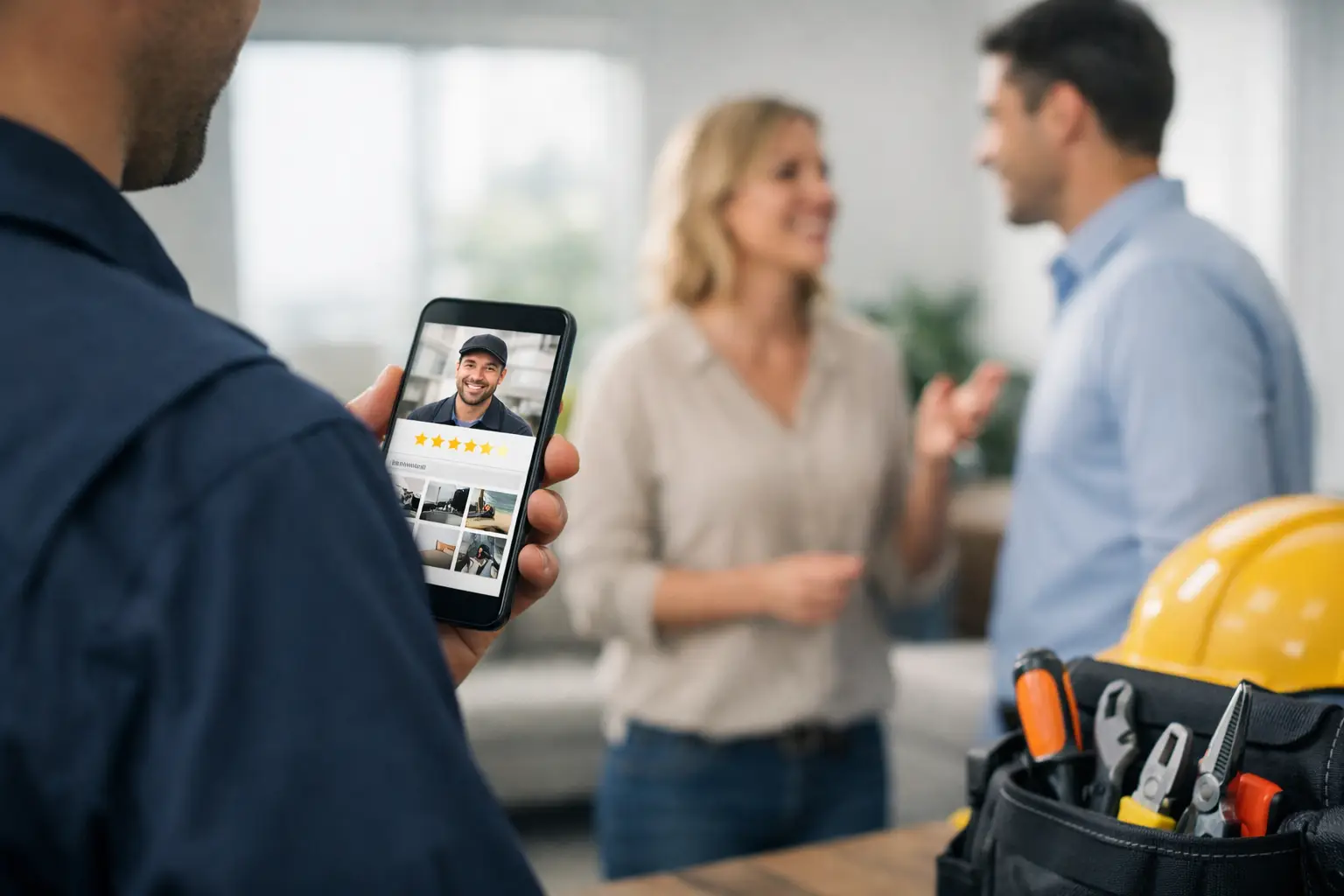
A missed call at 2:17 PM can cost more than the monthly price of most software. That is the reality for local operators who are out cleaning a house, fixing an AC unit, or finishing a lawn while a new customer is trying to decide who to hire. A service business public profile gives that customer somewhere clear to land fast, even if you do not have a full website and cannot answer right away.
For a solo operator or small crew, that matters more than having something fancy. Most customers are not judging your business by how many pages your site has. They want to know three things quickly: what you do, where you work, and how to reach you. If they can get that in a few seconds, you stay in the running. If they cannot, they move on.
What a service business public profile actually does
A service business public profile is a simple public page for your business. It shows the basics that help people trust you and contact you without friction. That usually includes your business name, service area, services offered, photos, reviews or proof of work, contact details, and a way to request a quote.
The real value is not just visibility. It is speed. When someone finds you through Google, a social post, a text, a QR code on a flyer, or a referral, they need one place that makes the next step obvious. A profile does that without forcing you to build and maintain a full website.
That is a big difference for service businesses that run mostly from a phone. A full website can help in some cases, especially for larger companies with multiple locations or more complex marketing. But for many cleaners, plumbers, electricians, and other local pros, a public profile covers the part that actually drives revenue: helping real people contact you now.
Why a service business public profile beats waiting for a website
A lot of small operators put off their online presence because they assume the only good option is a full website. Then weeks turn into months, and they are still sending people to an Instagram page, a Facebook profile, or nowhere at all.
That delay costs jobs.
A public profile is often the better first move because it is faster to launch, easier to keep updated, and more useful in the places where service businesses actually get leads. If someone asks for your info in a text thread, you can send one link. If a customer scans a code from your business card, they land on one page built to convert. If a referral wants to check you out before reaching out, they see enough to feel comfortable contacting you.
There are trade-offs. A full website gives you more design control, more room for long-form content, and sometimes more SEO opportunity over time. But that only helps if you have the time, money, and attention to keep it current. A stale website with old phone numbers, outdated service areas, or no clear call to action can hurt more than it helps.
A profile is usually the cleaner operational choice. It is easier to share, easier to manage, and easier for customers to use on mobile.
What customers look for before they contact you
Most service business owners think they need to impress people online. In reality, customers are usually trying to reduce risk. They are asking themselves if you are real, local, responsive, and capable of doing the job.
That means your public profile should answer practical questions fast. What services do you offer? Which cities or ZIP codes do you cover? How can someone reach you right now? Do you have photos that show your work? Is there anything that signals reliability, like recent jobs, testimonials, or a professional business description?
This is where simple wins. A clear profile with accurate details beats a pretty page that makes people hunt for basic information.
For bilingual operators, this matters even more. If your customers speak both English and Spanish, or if you run your business mainly in Spanish, your profile should not create language friction. A customer who feels understood is more likely to reach out. An owner who can manage the business in the language they are most comfortable using is more likely to keep the profile updated and actually use it.
Where a public profile helps most
A service business public profile is not just for search traffic. It works best when it becomes the one place you send every lead source.
That includes referrals, direct messages, yard signs, door hangers, social bios, marketplace outreach, and Google business traffic. Instead of sending people to different places depending on where they found you, you point them to one page that keeps the next step simple.
This also helps offline marketing work harder. A flyer without an easy path to action gets ignored. A van magnet that leads to a profile through a QR code can turn street visibility into real leads. The same goes for business cards and leave-behinds after a job.
If you are already paying for leads from marketplaces, a strong profile gives you a better follow-up path too. Some customers are not ready to book from the first reply. They want to check you out first. If your message includes a clean public profile, you remove uncertainty without adding extra back-and-forth.
What to include in your profile if you want more booked jobs
Keep the page focused on conversion, not decoration. Start with your core service and your location. Say what you do in plain English. A customer should know within seconds whether you are relevant.
Then make the contact path obvious. If you want calls, show the number clearly. If you want quote requests, make that action easy. If text is your best channel, do not bury it.
Photos matter, but only if they support trust. Use real job photos when possible. Stock images can fill space, but they do not prove much. The same logic applies to your description. Skip generic lines and say what type of jobs you handle, who you help, and what areas you serve.
If you have reviews or customer feedback, include them. If you do not, do not panic. Clear service information and fast response still move people to contact you.
The biggest mistake small service businesses make
The biggest mistake is treating online presence like a branding project instead of a lead capture system.
Your public profile is not there to win design awards. It is there to help the right customer take action while you are busy doing the work. That means every part of it should reduce delay and confusion.
Too many operators lose leads because they spread information across five places, respond late, or make customers guess what to do next. A public profile fixes that only if it stays current and connected to how you already work.
That is why simple tools usually outperform complicated ones for small teams. If updating your profile feels like office work, it will not get done. If it is easy enough to manage from your phone, you have a much better shot at keeping it useful.
Platforms like GigConvert are built around that reality. The goal is not to give you more software to babysit. It is to give you a shareable public profile that helps people find you, trust you, and contact you quickly, without needing a traditional website to start.
When a public profile is enough, and when it is not
For many local service businesses, a public profile is enough to start generating and capturing leads well. That is especially true if you are a solo operator, work in a defined service area, and get most of your business from referrals, local search, marketplaces, social media, or direct outreach.
If you are growing into multiple crews, adding several locations, investing heavily in content marketing, or competing in a market where search visibility is very aggressive, you may eventually want a larger website too. But even then, the profile still has a job. It remains the fast, direct page you can share anywhere.
So this is not an either-or question forever. It is often a right-now question. What helps you catch more leads this week with the least friction?
For a lot of service businesses, the answer is not more pages. It is one strong public profile that works everywhere your customers already are.
If your next customer finds you on a phone screen between errands, school pickup, and dinner, they are not looking for a digital masterpiece. They are looking for a reason to trust you and an easy way to reach you. Give them that, and your online presence starts doing its real job.