
Service Business QR Marketing That Books Jobs
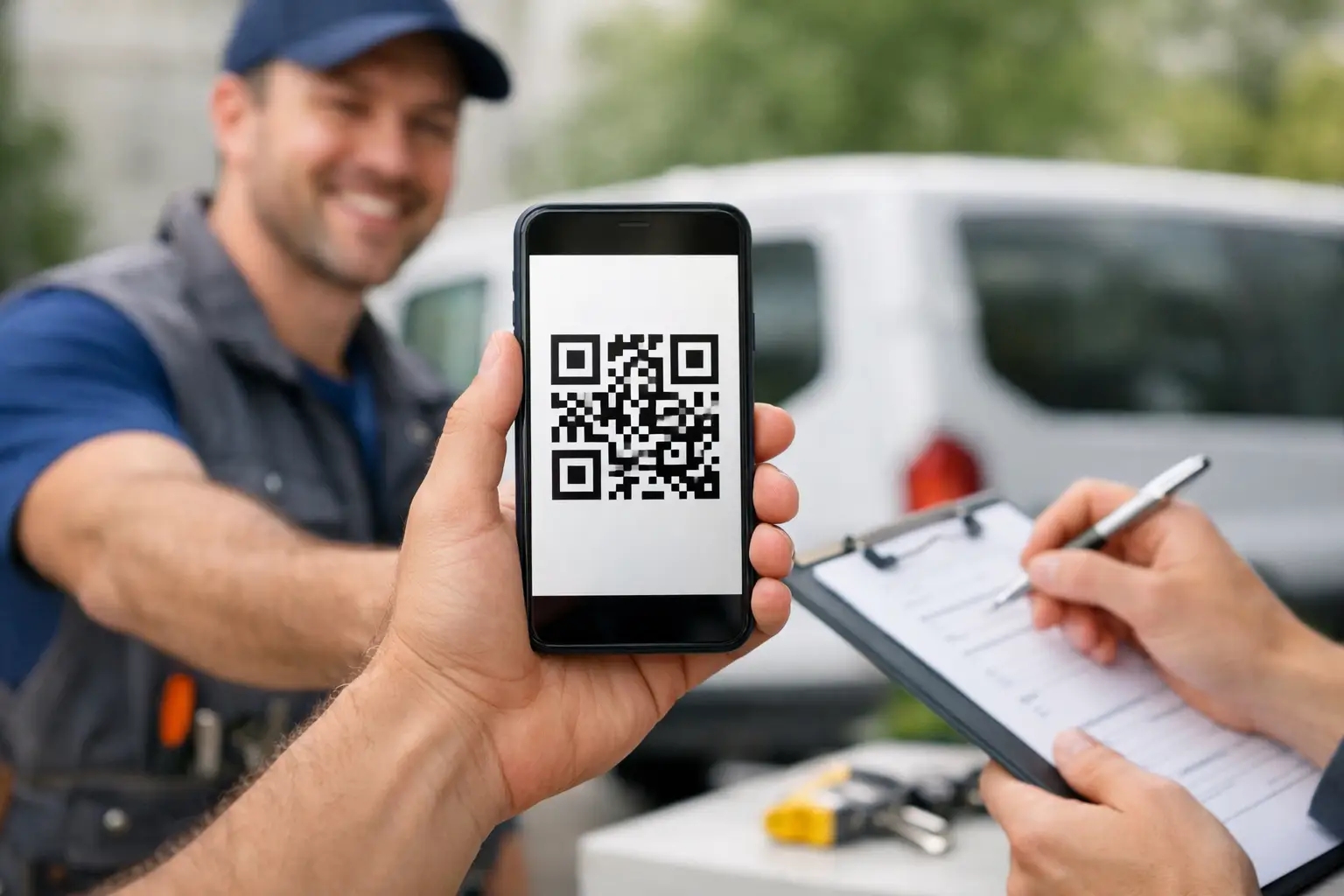
A van magnet gets seen. A flyer gets handed out. A business card lands on a kitchen counter. Then nothing happens because the customer means to call later and forgets. That is exactly where service business QR marketing can make a real difference. It gives people one fast next step - scan, view your info, and contact you while the need is still fresh.
For solo operators and small teams, that matters more than fancy branding. Most local service businesses do not have a traffic problem. They have a follow-through problem. People see the business offline, but there is too much friction between interest and action. A QR code closes that gap.
What service business QR marketing actually does
At its best, QR marketing is not about the code itself. It is about shortening the path from attention to lead. A customer sees your yard sign after a move-out clean, scans it, and lands on a page where they can call, text, request a quote, or message right away. No searching your name. No typing a long website address. No hoping they remember later.
That is especially useful in home services because buying intent often happens in the moment. A neighbor notices a cleaning crew. A homeowner sees your van while their own AC is acting up. A property manager gets your card when they are between vendors. If they can act in five seconds, your odds go up. If they need to take three steps first, many will drop off.
Good service business QR marketing turns offline materials into working lead sources. Great QR marketing also lets you see which materials are actually producing inquiries, so you can stop guessing where jobs come from.
Where QR codes work best for local service businesses
The strongest use cases are usually the simplest ones. Put a QR code anywhere a prospect already has a reason to trust you or notice you.
Your vehicle is one of the best examples. People see it in neighborhoods you already serve, which means the location itself is doing part of the selling. A code on a van magnet or door decal works best when the text around it is clear and specific, like Get a fast quote or Book a cleaning. A QR code by itself is easy to ignore.
Printed leave-behinds also work well. Think business cards, door hangers, invoice handouts, fridge magnets, and thank-you cards after a completed job. These are warm opportunities because the customer has either used your service or met you in person. A scan here can lead to repeat jobs, referrals, or a second service.
Flyers can work too, but only if the offer matches the placement. A generic flyer on a community board is weaker than a flyer aimed at a clear need, such as recurring house cleaning, move-in cleaning, or same-week lawn service. The QR code should take people directly to the exact service they are interested in, not a generic homepage with too many choices.
Yard signs are underrated. If you are doing work in visible residential areas, neighbors notice. A simple sign with your service, city, and a QR code can generate interest without requiring anyone to write down your phone number while driving past.
Why most QR campaigns fail
The usual problem is not the technology. It is the offer and the destination.
A lot of service businesses print a QR code that sends people to a weak page, a social profile with no call to action, or a site that loads slowly and is hard to use on a phone. That defeats the whole point. The scan should lead to one clean mobile-friendly place where a customer immediately knows what you do and how to contact you.
The other mistake is making the code do too much. If the page asks people to hunt through tabs, read long paragraphs, or fill out a complicated form, conversions drop. Local service leads usually come from urgency and convenience. Keep the path short.
There is also a trust issue. If a customer scans your code and lands on something that looks outdated, incomplete, or confusing, they may leave even if they still need the service. For small operators, this is why a simple public business profile can outperform a bloated website. It is faster to keep current and easier for customers to use.
How to set up service business QR marketing that converts
Start with one goal per QR code. If the card is for new estimates, send people to a quote request page or profile with call and text options. If the leave-behind is for repeat cleaning, send them to a booking path for recurring service. One code can technically do many things, but one clear intent usually converts better.
Next, make the destination mobile first. Most scans happen on a phone, often while someone is standing outside, in a hallway, or between tasks. They do not want to pinch, zoom, or read a wall of text. They want to know three things quickly: what you do, where you work, and how to reach you now.
Then add a reason to act. Fast quote, same-day reply, bilingual support, easy booking, and text us now are all stronger than scan me. Customers respond to outcomes, not features.
Finally, connect the scan to lead capture, not just visibility. If a QR code sends people to a profile where they can message, call, or submit a request right away, you have a real shot at turning interest into a job. If it only sends them to an info page with no next move, you are paying for awareness and hoping for the best.
The bilingual advantage most competitors miss
For many home service businesses, especially owner-operators, English-only marketing tools create friction on both sides. The business owner may prefer to manage leads in Spanish, and the customer may prefer either English or Spanish depending on the household. That is not a niche issue in many US markets. It is normal daily business.
This is where QR marketing gets more useful when the follow-up system is bilingual too. A customer scans a code, sends a message, and gets a quick response in the language they are comfortable with. That speed and clarity can be the difference between getting the job and losing it to whoever replied first.
If your offline marketing is working but your response process is slow, the QR code alone will not fix that. It still has to connect to a system that captures the lead and helps you answer quickly. That is one reason tools like GigConvert are practical for small service businesses - the QR code is tied to a public profile and lead capture flow that is simple, mobile-friendly, and built for fast replies in English and Spanish.
How to measure whether your QR marketing is worth it
You do not need complicated reporting to know if this is working. You need a few clear signals.
First, look at scans by source. If your van gets scans but your flyers do not, you know where attention is actually coming from. Second, look at leads, not just scans. A code that gets fewer scans but more quote requests is stronger than one that gets curiosity clicks and nothing else. Third, look at speed to response. If people scan but do not book, slow follow-up may be the real problem.
There are trade-offs here. QR codes can be very effective for warm local traffic, but they are not a replacement for every marketing channel. If nobody sees your print materials, the code will not create demand out of thin air. It works best when paired with real-world visibility - trucks, job sites, referrals, handouts, and neighborhood presence.
That is also why small tests beat big print runs. Try one van decal, one revised business card, or one leave-behind for completed jobs. Track what happens. Improve the call to action, adjust the destination, and only then print more.
Keep it easy for the customer and easy for yourself
The best service business QR marketing is simple enough to maintain when you are busy. You should not need a designer every time you change services or a developer every time you want a better lead path. If you can text, you should be able to manage where your QR code sends people and how those leads get handled.
That is the real standard to use. Not whether the marketing looks advanced, but whether it helps a busy service business capture more demand without adding more admin work.
If a QR code gets one more customer to reach out while the need is still fresh, and your system helps you respond before the competition does, that small square on your card or van starts pulling a lot more weight than most people expect.