
Online Profile for Local Service Business
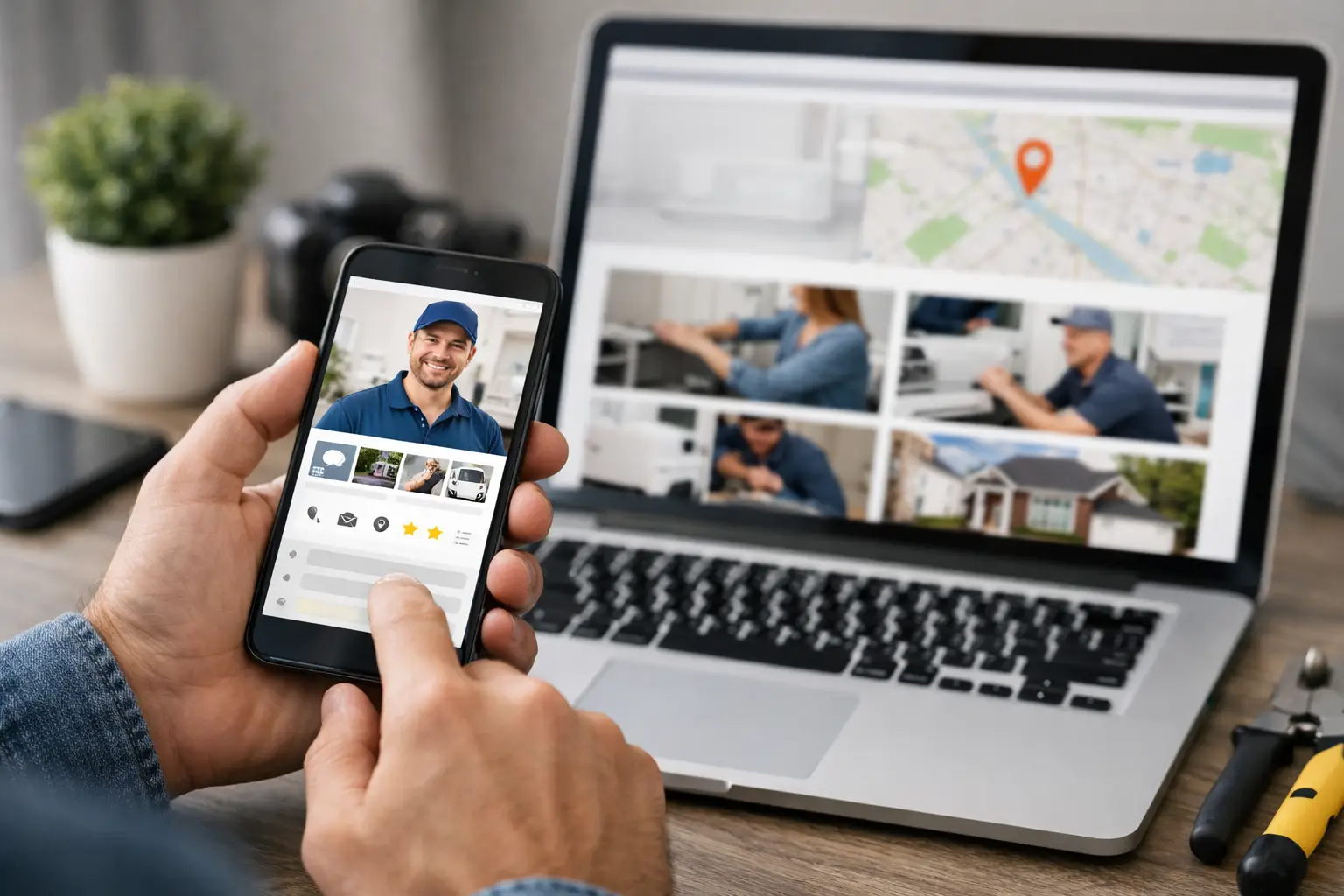
A homeowner does not spend twenty minutes studying your business. They look you up, scan a few photos, check your service area, and decide whether to call or move on. That is why an online profile for local service business owners matters so much. It is often the first real impression you make, and for many small operators, it does more work than a full website ever will.
If you run a cleaning company, lawn care business, plumbing service, or another local operation, your online presence has one job - help people trust you quickly enough to contact you. Not impress them with fancy design. Not bury them in pages of text. Just make it easy to see what you do, where you work, and how to reach you.
Why an online profile for local service business owners matters
Most local service buyers are making a fast decision. They have a problem, they want it handled soon, and they are usually comparing a few options at once. If your business is hard to understand online, slow to reply, or missing basic information, you lose before the conversation starts.
A good profile fixes that. It gives people a clear snapshot of your business in one place. Your services, service area, contact info, reviews or proof of work, and a simple way to request a quote all show up where the customer needs them. That matters even more for solo operators who are on the job all day and cannot stop to explain everything one call at a time.
This is also where many small businesses waste money without realizing it. They pay for leads from marketplaces, print flyers, post on social media, and ask for referrals, but all that traffic lands nowhere useful. If someone taps your name and finds an incomplete page, an old Facebook post, or no clear contact path, you are leaking business.
Your profile is not just branding - it is lead capture
A lot of service pros think of an online profile as a digital business card. That is too small. A strong profile should act more like a booking tool.
It should answer the questions a customer asks before they ever reach out. Do you serve my area? What kind of jobs do you take? Are you active? Do you look legitimate? Can I contact you right now without jumping through hoops?
When those answers are easy to find, more leads turn into conversations. When contact options are simple, more conversations turn into booked jobs. That is the real value.
For small home service businesses, this can be better than spending months trying to build a traditional website. A website can help in some cases, especially if you have multiple crews, lots of service pages, or a broader marketing strategy. But many solo operators do not need ten pages and a blog. They need one clean, shareable place that helps customers take the next step.
What to include in an online profile for local service business growth
The best profiles are simple, but they are not empty. They focus on the few details that move a customer from maybe to yes.
Start with the basics. Your business name, phone number, service area, and core services should be obvious right away. If you clean homes, say whether you offer standard cleaning, deep cleaning, move-out cleaning, or recurring service. If you handle HVAC or plumbing, name the jobs you actually want more of. Specificity helps customers self-qualify.
Photos matter more than many owners think. Not because customers expect a polished brand shoot, but because real images build trust. Clean before-and-after shots, team photos, work vehicles, and straightforward job examples help people feel that your business is active and real.
Your response path matters just as much as your content. A profile that looks good but makes people hunt for a contact form will underperform. Calls, text, and quote requests should feel immediate. If a customer has to work too hard to reach you, many will not bother.
Language access can also be the difference between a lead won and a lead lost. In many US markets, customers and operators are bilingual or Spanish-first. A profile that supports English and Spanish is not a nice extra. In the right market, it is basic customer service and a real conversion advantage.
When a profile can replace a website
For a lot of small service businesses, the honest answer is yes.
If most of your leads come from referrals, Google searches, social media, flyers, yard signs, or marketplaces, you may not need a traditional website first. You need a public page you can share anywhere. Something that works when a customer scans a QR code, clicks from a text message, or checks you out after seeing your business on Google.
That does not mean websites are useless. If you want more control over SEO, custom content, or a larger brand presence, a website can be worth it. But it also comes with more setup, more maintenance, and more opportunities for things to break or go out of date.
For an owner-operator trying to book more jobs this month, a focused online profile is often the faster move. It gets you online, makes your business look professional, and creates one place to send every lead source.
The trade-off: simple wins, but only if it is complete
There is a catch. A simple profile works only when it is finished and kept current.
An outdated profile can hurt just as much as no profile at all. Wrong phone number, old service area, missing photos, or no reply option sends the message that the business may not be reliable. Customers notice that quickly.
This is why the best setup is one you can actually maintain. If you are not technical, you should not need to learn a website builder, write long copy, or manage complicated forms. Your online presence should be easy enough to update from your phone between jobs.
That is also why hands-on setup support matters. Many business owners do not need more software. They need less friction. If you can text, send photos, and answer a few questions, you should be able to get your profile live.
How to make your profile bring in more booked jobs
Think about where your leads come from now. Maybe it is Thumbtack, Angi, Yelp, Google LSA, referrals, Facebook groups, truck signage, or door hangers. Every one of those channels works better when they point to one clear profile.
That profile should not just sit there. It should help you respond faster and capture information while the customer is ready. Fast response time is one of the biggest drivers of conversion in local services. If a lead comes in and hears nothing for hours, they contact someone else.
This is where your profile and your follow-up process connect. The strongest setup is not just a public page. It is a page tied to a single inbox, quick replies, and call or text handling that keeps leads from falling through the cracks.
For example, if a customer scans a QR code on a flyer and lands on your profile, they should be able to message or call immediately. If that inquiry gets captured in one place with the rest of your leads, you are far more likely to follow up and close it. That is the practical difference between being online and actually converting online.
Platforms like GigConvert are built around that reality. Instead of asking small service businesses to piece together a website, forms, phone tools, and lead follow-up on their own, the goal is to give them one public profile that is easy to share, easy to manage, and tied directly to faster lead response.
What customers actually want to see
Customers are not grading your profile like a marketing expert. They are looking for proof that hiring you will be easy.
They want to know you serve their area, do the type of work they need, and can respond without delay. They want a few signs that other people trust you. They want contact options that fit how they already communicate, usually phone and text. And they want to feel confident that if they reach out, someone will answer.
That is why the best online profile for local service business owners is usually the one that removes the most friction. Not the one with the most pages. Not the one with the fanciest language. The one that gets a customer from interest to inquiry in the fewest steps.
If your current online presence makes people work to understand you, simplify it. If it sends leads to three different places, centralize it. If you keep saying you need a website but really need more booked jobs, start with the tool that helps people contact you today.
Your next customer is probably not asking whether your business has a perfect website. They are asking whether you look trustworthy and whether you will answer. Build your profile around that, and your online presence starts doing what it should - helping you win work while you are out doing the work.