
Home Service Booking Software That Gets Used
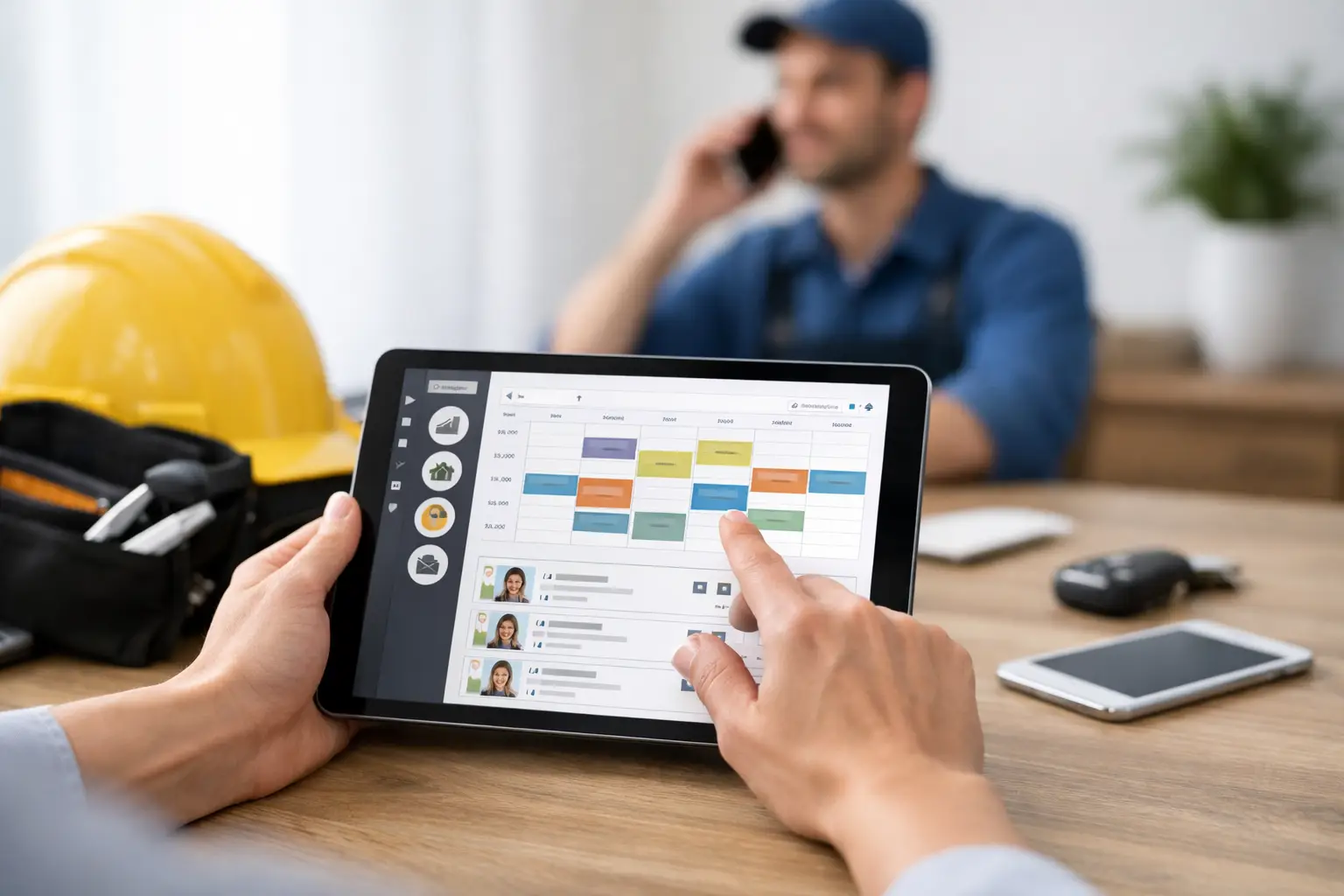
Most home service owners do not need more software. They need fewer missed calls, faster replies, and a simpler way to turn leads into booked jobs. That is where home service booking software either proves its value fast or becomes one more thing you pay for and ignore.
If you run a cleaning company, plumbing business, HVAC shop, electrical service, or lawn care crew, the real question is not whether you need technology. It is whether the tool helps while you are working in the field. If you have to stop everything, log into five tabs, and figure out a complicated setup, it will not last. Good software should feel closer to texting than to learning a new system.
What home service booking software should actually do
A lot of tools promise scheduling, automation, and customer management. That sounds good until you realize those features do not matter much if new leads sit unanswered for two hours. For most small service businesses, the first job of home service booking software is simple: help you respond fast enough to win the job.
That means capturing leads from the places customers already contact you - phone calls, text messages, web forms, Google, and lead marketplaces. It also means keeping those conversations in one place so you are not bouncing between your phone, email, and a lead app while trying to finish a job.
Booking is the next step. The software should make it easy to qualify the lead, offer times, confirm the appointment, and keep your calendar accurate. If it can automate part of that process, even better. But automation only helps when it is easy to trust. If the system sends confusing replies or books the wrong service, it creates more cleanup work.
The biggest mistake small teams make when choosing software
Many owners shop for the biggest platform they can afford because they assume more features mean more growth. Usually, the opposite is true. Solo operators and small teams tend to get the best results from tools that do a few important things very well.
The trade-off is real. Large field service systems can offer dispatch boards, inventory management, deep reporting, and complex workflows. If you have multiple office staff, several crews, and established processes, that can make sense. But if you are the owner, the cleaner, the estimator, and the person answering calls, complexity becomes a tax on your day.
A simpler platform can outperform a bigger one when it helps you do three things consistently: answer faster, follow up automatically, and book without back-and-forth. That is usually where revenue moves first.
What to look for in home service booking software
Start with lead response speed. If a customer messages three businesses and one replies within 30 seconds while the others respond an hour later, you already know who has the advantage. Speed is not everything, but in local services it matters a lot.
Next, look at communication channels. Some software is strong on scheduling but weak on lead intake. Others handle forms well but leave phone calls disconnected from the rest of the workflow. For many home service businesses, especially small ones, calls and texts still drive a huge share of bookings. If those are not built in cleanly, the system has a hole where money leaks out.
Calendar handling matters too. You want something that can book jobs without creating confusion. That includes confirming appointments, preventing double booking, and making it easy to adjust when the day changes. The simpler the calendar view, the more likely it gets used.
Then there is follow-up. Not every lead books on the first message. Some ask for a quote, some say they need to check with a spouse, and some disappear for two days. Good software helps you stay on those leads without forcing you to remember every next step manually.
For many operators, mobile usability is the deciding factor. If the platform works great on a laptop but feels clunky on a phone, it is going to slow you down. Most small service owners are not sitting at a desk. They are between jobs, in the truck, or on-site.
Why bilingual support is not a bonus feature
For a large number of home service businesses in the US, bilingual communication is not optional. It affects hiring, customer communication, onboarding, and daily operations. Yet a lot of software still treats Spanish support like an afterthought.
That creates friction immediately. If the dashboard, automated replies, or phone answering only work well in English, Spanish-first operators end up adapting themselves to the software instead of the software supporting the business. That usually means slower adoption, more mistakes, and less trust in the tool.
True bilingual home service booking software should support both English and Spanish in the places that matter most: messages, call handling, booking flow, and day-to-day use. If a system claims bilingual support but only translates a few labels, that is not enough. The test is simple - can your business run naturally in the language you actually use?
The difference between booking software and a real growth tool
Some scheduling tools are basically digital calendars with a nice coat of paint. They help organize appointments, but they do not help you get more of them. That may be enough if your demand is already steady. For many small service businesses, though, the harder problem is not managing a full calendar. It is filling the open spots.
A stronger setup does more than store appointments. It captures leads from multiple sources, replies fast, keeps conversations moving, and makes it easy for customers to say yes. That is when software starts acting like a growth tool instead of just an admin tool.
This is also where a public booking presence matters. A lot of solo operators still think they need a full website before they can look professional online. Often they do not. A simple, shareable business profile that can collect leads and bookings can do the job just fine, especially when paired with direct messaging, directory visibility, and a QR code for offline marketing.
When AI helps and when it does not
AI can be useful in home service booking software, but only when it solves a real bottleneck. The best use case for most small businesses is instant response. If AI can reply to new leads in seconds, ask the right qualifying questions, summarize calls, and help schedule jobs, that saves time where owners usually lose it.
But there is a limit. If AI sounds robotic, misses context, or creates awkward customer interactions, it can hurt trust. Home services are local and personal. Customers want to feel like a real business is responding, not a generic script. So the standard should not be whether a tool has AI. It should be whether the AI helps you book more jobs without making conversations worse.
For small teams, the best AI is often the kind you barely notice. It answers quickly, gathers the basics, and hands you a cleaner next step.
A practical way to choose the right software
Before you buy anything, look at your last 20 leads. Where did they come from? How fast did you respond? How many booked? Where did communication break down? Those answers will tell you more than any feature page.
If most of your leads come from calls and texts, prioritize phone and messaging. If you buy leads from marketplaces, focus on response speed and follow-up. If your biggest issue is missed appointments or scheduling confusion, then calendar and confirmation tools move higher on the list. The right choice depends on where your actual bottleneck is.
It also helps to ask one blunt question: will I really use this while I am working? If the answer is maybe, keep looking. The best software for a small service business is the one that fits your day as it already exists, then makes it easier.
That is one reason platforms like GigConvert appeal to smaller operators. The value is not in giving you a hundred features. It is in helping you catch every lead, respond quickly in English or Spanish, and book jobs without turning your business into an office job.
What good software should feel like after two weeks
After two weeks, you should not still be learning the basics. You should be seeing fewer missed leads, faster response times, and less mental clutter. You should know where conversations are happening, what is booked, and what still needs follow-up.
If instead the software feels like homework, it is probably the wrong fit. That does not always mean the tool is bad. It may just be built for a larger team or a different kind of business. Good software matches your stage, not your aspirations five years from now.
The right home service booking software does not need to impress you with complexity. It needs to help you win the next job, then the next one after that, without stealing time from the work that already pays the bills.
When you are comparing options, trust the tool that makes your day lighter, your replies faster, and your booking process clearer. That is usually the one your business will keep using.