
English Only Software Versus Bilingual Tools
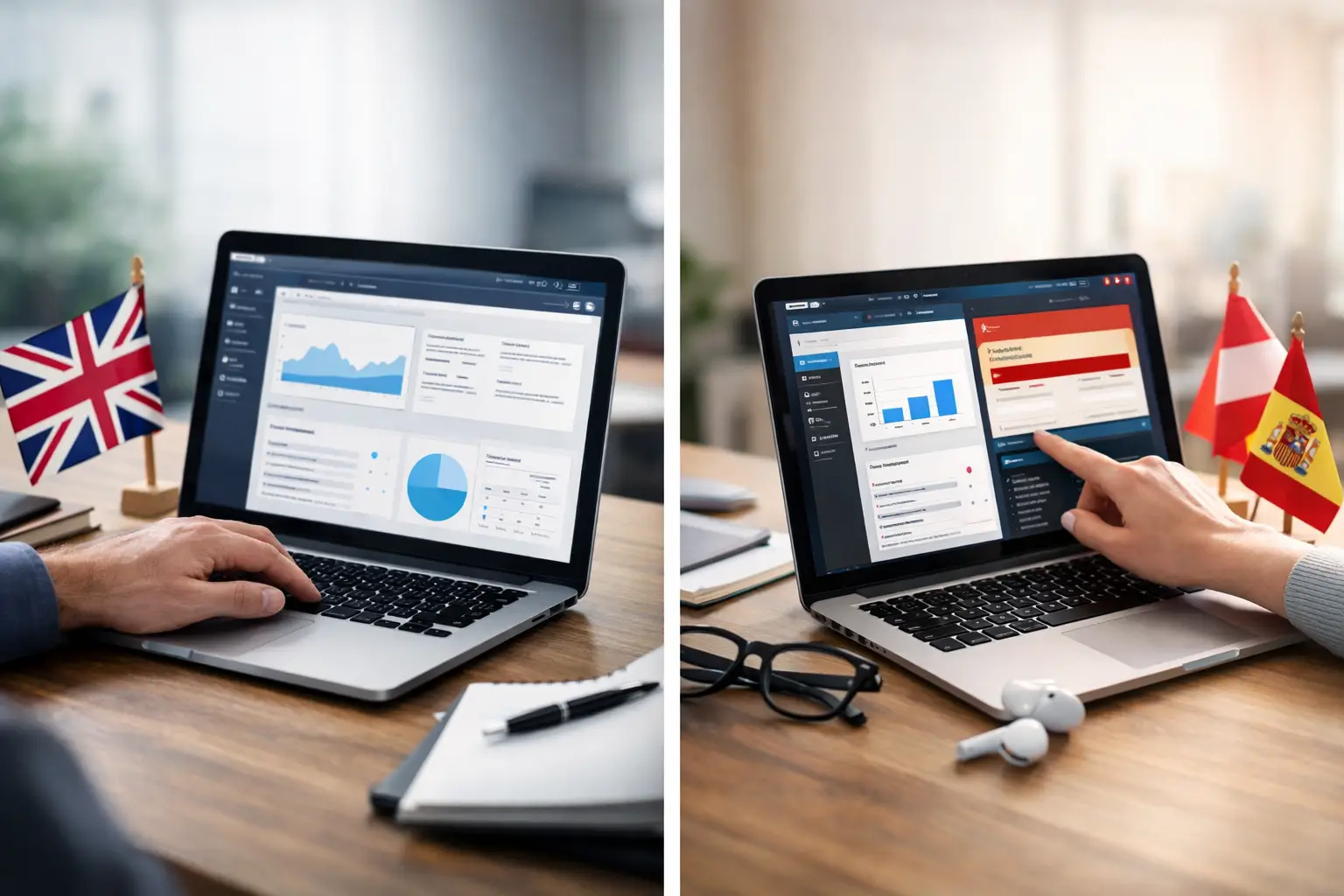
A missed lead rarely looks dramatic. It usually looks like a text answered too late, a call that went to voicemail, or a message inside software nobody felt confident using. That is why english only software versus bilingual tools is not a branding debate for small service businesses. It is an operations decision that affects response time, follow-up, and booked jobs.
If you run a cleaning company, lawn care business, plumbing shop, or other local service operation, your software has one job: help you catch leads and turn them into paying customers without slowing you down. For many owners, especially Spanish-first operators, English-only tools add friction at the worst possible moment. Not because the business owner is not capable, but because every extra second spent translating labels, guessing at settings, or avoiding a feature is a second not spent replying to a customer.
Why english only software versus bilingual tools matters in the field
Most software companies talk about language support like it is a nice extra. For a solo operator working out of a truck or between cleaning jobs, it is more basic than that. If the inbox, calendar, call notes, automations, and setup instructions are only in English, the owner has to do constant mental translation while working. That slows everything down.
The cost shows up in simple ways. A lead comes in from Thumbtack or Yelp. The owner sees it, means to answer, but wants to wait until they can read everything carefully. Or they hand the task to a spouse, assistant, or team member who is more comfortable in English. Or they skip settings that would help because they are not sure what the button means. None of this looks like a software failure on paper. But it creates lower adoption, weaker follow-up, and fewer booked jobs.
Bilingual tools reduce that friction. They let the business owner operate in the language that feels natural while still serving customers in English, Spanish, or both. That matters a lot in local home services, where the person doing the work is often also answering the phone, sending estimates, and managing the schedule.
The real advantage of bilingual tools is speed
Small service businesses do not need software that looks impressive in a demo. They need software that gets used every day. That is the real line in english only software versus bilingual tools.
When someone can read the dashboard instantly, reply without hesitation, and understand what the system is doing, they move faster. Faster lead response usually means more conversations. More conversations usually mean more quotes and more jobs.
This is especially true when the tool includes AI replies, call handling, or automated follow-up. Automation only helps if the owner trusts it. If the reply templates, call transcripts, or booking settings are hard to understand, many owners will leave those features off. A bilingual system is more likely to be turned on, checked regularly, and used correctly.
That does not mean every company needs every feature in two languages all the time. It means the tool should match how the business actually runs. If the owner thinks in Spanish but serves customers in both Spanish and English, the software should support both sides of that workflow.
Where English-only software can still work
There are cases where English-only software is good enough. If the owner is fully comfortable managing settings, messages, and reporting in English, and the team also works that way, language may not be the main issue. The bigger problems might be price, complexity, or poor mobile use.
Some bilingual business owners also prefer English in software because that is what they are used to from other apps. Others only need customer-facing communication in Spanish, not the whole backend.
So this is not a claim that English-only software is always wrong. It is that many small operators have been forced to adapt to tools that were not built for them, and that adaptation has a cost.
Training is where the gap gets bigger
A lot of software gets sold on features and lost during setup.
For solo operators and small crews, onboarding matters more than most software companies admit. If setup requires reading long help articles, translating unfamiliar words, or figuring things out late at night after jobs are done, adoption drops fast. Features that looked useful during the sales process become one more thing to postpone.
Bilingual tools help because they reduce confusion from day one. If onboarding, support, and walkthroughs are available in the language the owner is most comfortable with, there is less hesitation. The owner can start using the system sooner and with fewer mistakes.
This is also why short visual guidance works better than dense documentation for many field-based businesses. A fast screen recording showing exactly what to tap is often worth more than a long written guide, especially for non-technical users. The best software for this market does not just translate words. It makes setup easier to act on.
Customer communication is not the same as internal usability
One common mistake is assuming bilingual support only matters for customer messages. It matters there, but that is only half the picture.
A tool might let you send Spanish messages to customers but still force you to manage the inbox, tags, automations, and reporting in English. That is better than nothing, but it still leaves the owner doing mental translation all day. True usability means the business can operate inside the software without friction.
This matters even more if multiple people touch the same lead. Maybe the owner speaks mostly Spanish, a helper speaks English, and customers switch between both. A bilingual system creates less confusion because each person can work comfortably while keeping the conversation in one place.
What to compare before you choose
If you are evaluating english only software versus bilingual tools, do not stop at the homepage claim that a platform is multilingual. Check what is actually bilingual.
Look at the dashboard. Look at the inbox. Look at the mobile experience. Ask whether AI replies work in both languages. Ask whether inbound call answering can qualify and respond in English and Spanish. Ask whether support is available in both languages, and whether setup is done in a way that makes sense for a busy operator.
Also look at the business outcome, not just the interface. Does the tool help you reply faster? Does it keep leads from getting lost across calls, texts, web forms, and marketplace messages? Does it make booking easier while you are out working? Those are the questions that matter.
For many small service businesses, the best system is not the one with the most features. It is the one the owner will actually use consistently on a phone between jobs.
The business case is simple
If language friction causes slower replies, skipped follow-up, poor setup, or underused automation, then bilingual software is not a luxury. It is a practical way to protect revenue.
That is especially true in local services, where the difference between winning and losing a job can be five minutes. Customers usually do not wait for the best company. They go with the first one that responds clearly and sounds ready to help.
A bilingual tool gives small operators a better shot at being that company. It helps them work in the language that feels natural, serve more customers confidently, and keep operations moving without extra admin. For Spanish-first and bilingual owners, that can be the difference between software they tolerate and software that actually helps them grow.
GigConvert was built around that reality for local service businesses that need to catch every lead and book more jobs without adding complexity. And that is the right lens for any software decision in this category.
Choose the tool your team can use quickly, trust daily, and act on without second-guessing every screen. When software matches how you actually work, better follow-up starts to feel a lot less hard.