
Best Website Alternative for Home Service Business
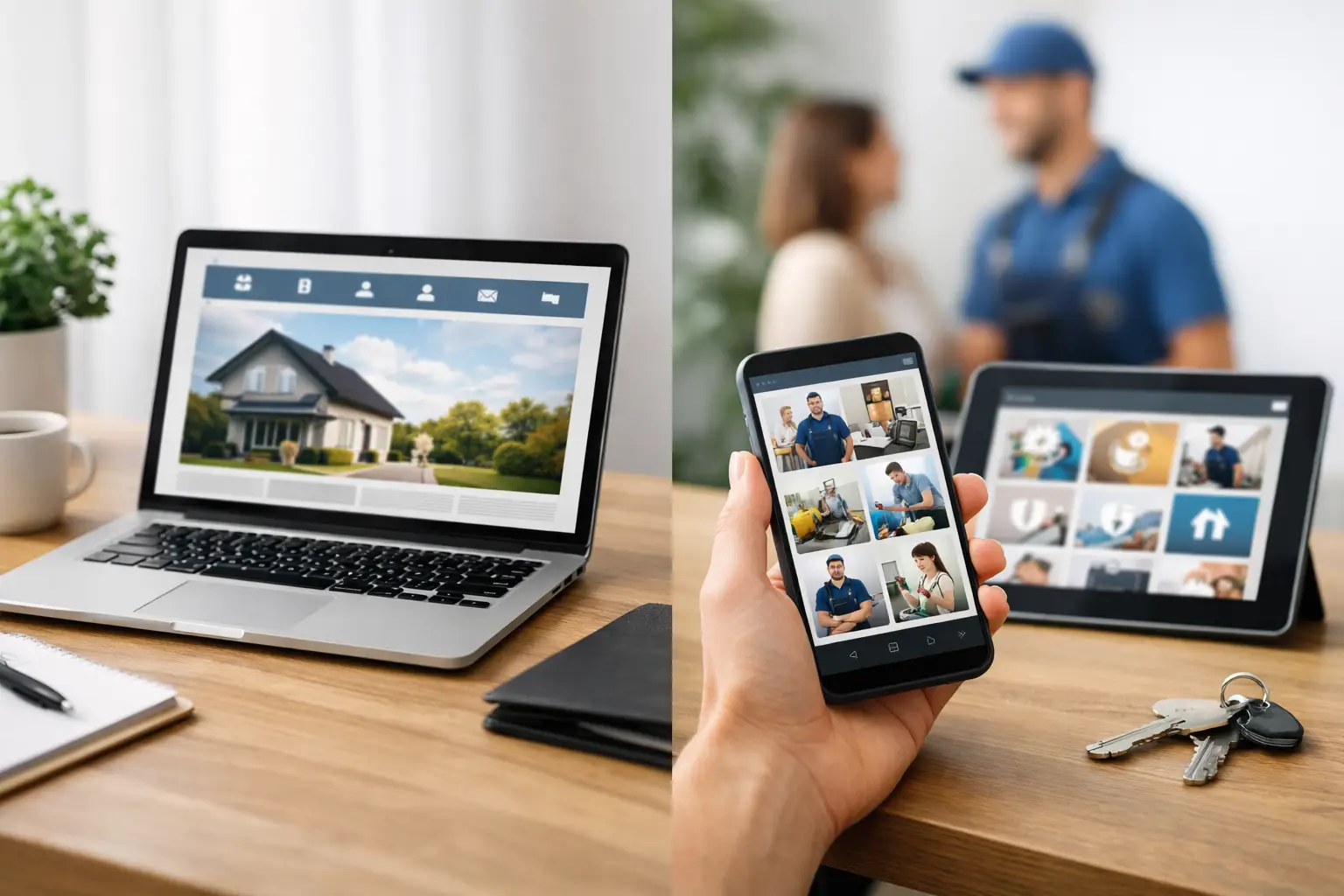
A lot of home service owners do not actually need a full website. They need a faster way to get found, look legit, and turn calls, texts, and messages into booked jobs. That is why a website alternative for home service business owners is worth a serious look - especially if you are a solo operator or small team that does not have time to build pages, update forms, or figure out SEO.
If most of your leads come from Google, referrals, yard signs, Yelp, Thumbtack, Angi, Facebook, or direct texting, a traditional website can be more work than help. It can sit there looking nice while leads still get missed because nobody replied fast enough. For many local service businesses, the real problem is not a lack of pages. It is a lack of speed, follow-up, and one clear place to send people.
What makes a good website alternative for home service business owners?
A real alternative has to do the job people hire a website to do. It needs to give customers confidence, explain what you offer, make it easy to contact you, and help you win work. If it cannot do those things, it is just another profile page.
For a cleaner, plumber, electrician, HVAC tech, or lawn care pro, that usually means five basics. You need a public business presence people can open on their phone. You need a simple lead form or direct message option. You need a way to show service area and services. You need reviews, photos, or proof that you are real. And you need a fast response system once the lead comes in.
That last part gets overlooked all the time. A website may help someone find you, but it does not book the job by itself. If a customer reaches out and waits two hours for a reply, the website did not fail because of design. It failed because the system behind it was too slow.
Why a traditional website is often the wrong first move
For big companies with office staff, a custom website makes sense. They may need multiple service pages, location pages, blog content, and a full marketing stack behind it. But that is not how most small home service businesses operate.
If you are in the field all day, your business runs on your phone. Leads come in while you are driving, cleaning, quoting, unloading tools, or finishing a job. You are not sitting at a desk updating plugins or checking whether a contact form still works.
A traditional site also comes with hidden costs. There is the build cost, the hosting, the edits, the time spent writing copy, and the constant pressure to "do SEO" without really knowing if it is bringing in booked jobs. Many owners end up with a site that looks fine but does not match how their customers actually contact them.
Most local customers are not reading six pages. They are checking three things fast: do you serve my area, do you do this job, and can I reach you right now?
That is where a leaner setup can beat a full website.
The smarter model: a public profile plus lead capture
The best website alternative for home service business growth is usually a public profile built for conversion, not browsing. Think of it as a simple online home base that works everywhere you share it.
Instead of sending people to a traditional homepage with menus and extra clicks, you send them to one clean profile. It shows your business name, services, service area, photos, reviews or trust signals, and a direct way to request service. That same profile can be shared from Google Business, social media, text messages, business cards, van magnets, and QR codes.
That matters because most small service businesses do not have one traffic source. They have ten small ones. A referral asks for your info by text. A prospect finds you on Google. Someone sees your flyer. Another person clicks from Instagram. You need one destination that works for all of them.
A good public profile also removes a common problem with social platforms. Social pages are fine for visibility, but they are not built for organized lead capture. Messages get buried. Response times slip. Follow-up gets messy. A better setup keeps the front-end simple for the customer and the back-end manageable for you.
What to look for instead of a website
If you are comparing options, focus less on design and more on whether the tool helps you respond fast and book work. A useful alternative should do four things well.
First, it should give you a shareable public presence. Customers should be able to open it quickly from any device and understand what you do in seconds.
Second, it should capture leads clearly. Whether the customer prefers a form, text, or call, there should be an obvious next step.
Third, it should help you respond without delay. This is where many small businesses lose money. Fast replies often matter more than polished branding.
Fourth, it should fit how you actually work. If you can only manage your business from your phone between jobs, the tool should be mobile-first and easy enough to use without training.
For many operators, bilingual communication also belongs on this list. If your customers speak English and Spanish, or if you run your business primarily in Spanish, the software cannot be another barrier. It should help you communicate faster, not force you to translate everything yourself.
Where this approach works best
A profile-based setup works especially well for service businesses that win jobs through urgency, referrals, and local trust. Cleaning companies are a perfect example. A customer usually wants to know availability, price range, service type, and how to reach you. They do not need a huge website to make that decision.
The same is true for many plumbers, handymen, electricians, painters, junk removal pros, and lawn care crews. When a pipe leaks or the grass is overgrown, the customer wants a quick answer. The business that responds first with something clear and professional often gets the job.
That does not mean websites are useless. If you are expanding into multiple cities, investing heavily in content marketing, or building a larger brand with office support, a full site may make sense later. But later is the key word. For a lot of small teams, the better first move is a simpler system that captures and converts leads now.
The trade-off: what you gain and what you give up
A website alternative is not magic. It is a practical trade.
You gain speed, simplicity, and less setup. You can get a professional web presence live faster, share it anywhere, and focus on replying to leads instead of managing pages. You also make it easier to connect offline marketing to online booking through tools like QR codes.
What do you give up? Usually, depth. A full website can support long-form content, multiple SEO pages, detailed service breakdowns, and custom design. If your strategy depends on ranking dozens of pages for many service variations, a profile alone may not cover everything.
That is why the right answer depends on stage. If you are trying to catch more leads this month, the simpler option may be stronger. If you are building a larger marketing engine over the next two years, you may eventually want both.
A practical setup for small service businesses
For most owners, the winning setup is simple. Use one public profile as your main online presence. Put your services, areas, photos, and contact options there. Share that same profile everywhere your prospects already find you. Then make sure all leads from calls, texts, forms, and marketplaces flow into one place so you can reply quickly.
That is the part many tools miss. Visibility matters, but lead handling matters more. If a platform gives you a public profile and also helps you respond in seconds, track conversations, and keep everything in one inbox, it starts replacing not just the website, but a lot of admin work too.
That is why platforms like GigConvert are getting attention from small home service businesses. The value is not just that you can skip a traditional website. It is that your public profile, lead capture, bilingual communication, and follow-up all work together without adding complexity.
If you can text, you can use a system like that. And for a busy operator, that is usually the difference between something you set up and never touch again, and something that actually helps you book more jobs.
Should you skip the website entirely?
Maybe. If your current website does not bring in leads, if you do not have time to manage it, or if most customers just need a fast way to contact you, then yes - a website alternative may be the better option right now.
But if you already have a strong site that ranks well and supports your sales process, keep it. This is not about following a trend. It is about using the simplest setup that helps your business win more work.
The best tools for small service businesses are the ones that match real life in the field. Fewer logins. Faster replies. Less missed work. More booked jobs. If your online presence can do that without making you build and babysit a full website, that is not cutting corners. That is making a smart business decision.