
How to Book Cleaning Estimates That Convert
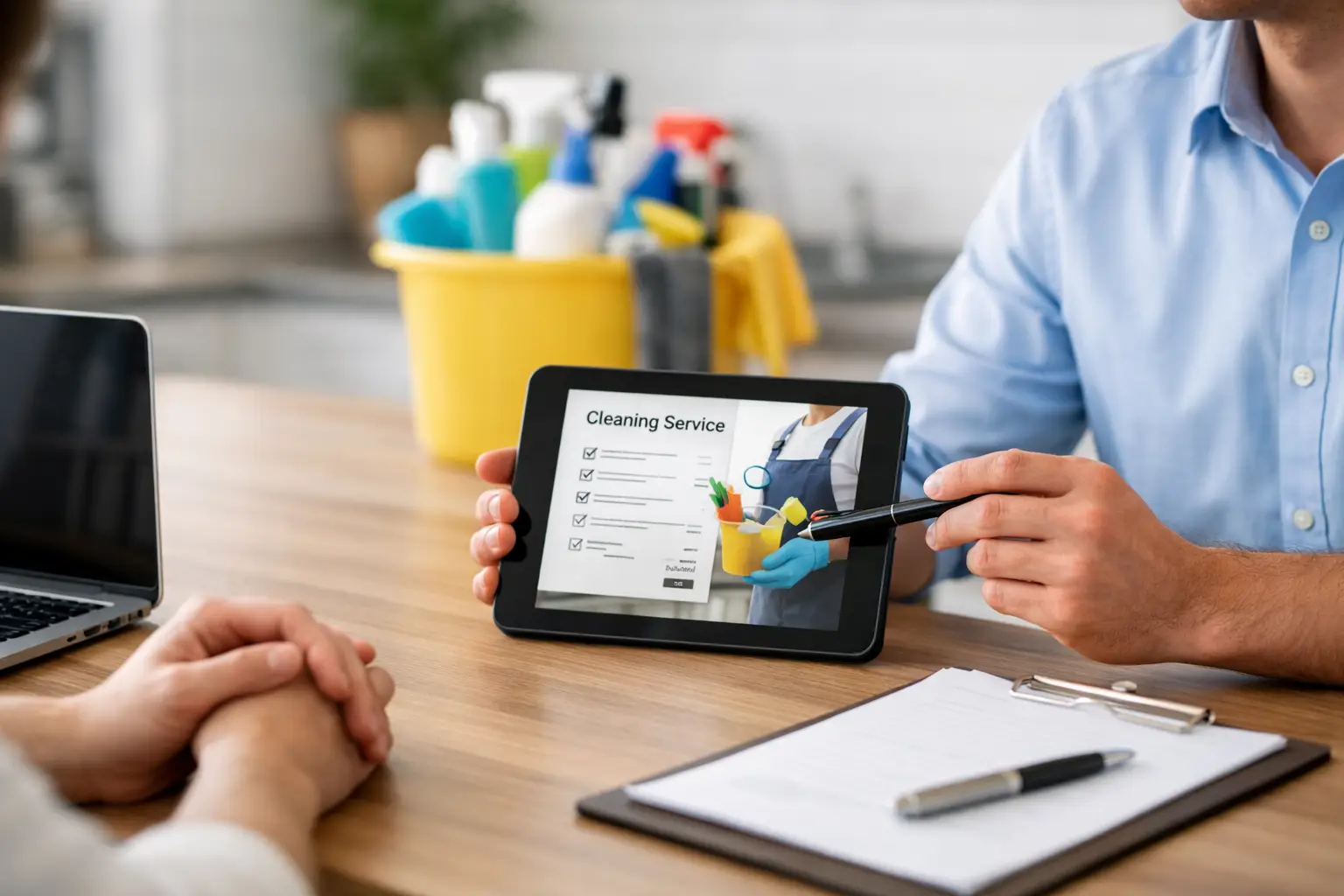
A lot of cleaning jobs are won or lost before you ever see the home. The customer sends a message, leaves a voicemail, or asks for a quote on a marketplace, and the real question becomes how to book cleaning estimates before that lead moves on to the next cleaner.
If you're a solo cleaner or a small team, this is usually where things get messy. You're working, driving, or finishing a job while new leads come in. By the time you reply, the customer may already have three other quotes lined up. The fix is not working longer hours. It's making your estimate booking process faster, simpler, and easier to say yes to.
Why booking estimates feels harder than it should
Most cleaning businesses do not have a lead problem. They have a response problem. A lead comes from Google, Thumbtack, Yelp, text, or a referral, and then it gets stuck in voicemail, scattered messages, or a mental to-do list.
Customers are usually not looking for a long sales process. They want quick answers to basic questions. Do you service their area? What kind of cleaning do they need? How much will it roughly cost? Can they get on the schedule soon? If they do not get a clear next step fast, they keep shopping.
That is why the businesses that book more estimates are often not the cheapest or the biggest. They are just easier to hire.
How to book cleaning estimates without wasting time
The goal is not to book every lead. The goal is to book the right estimate with the right customer and move them to a decision quickly. That starts with having one simple process you use every time.
Step 1: Reply fast, even if you cannot give a full quote yet
Speed matters more than perfect wording. A short reply in the first few minutes beats a detailed reply two hours later.
If someone asks for pricing, do not disappear while trying to calculate everything. Send a fast response that keeps the conversation alive and moves them toward the estimate. Something as simple as asking for the home size, number of bedrooms and bathrooms, type of cleaning, and preferred day is enough to keep control of the lead.
If your customers speak English and Spanish, this matters even more. Slow replies already hurt conversion. Language friction makes it worse. A fast, clear response in the customer's preferred language can be the difference between a booked estimate and a missed job.
Step 2: Pre-qualify before you offer a time
Not every estimate should go on your calendar. Some leads are outside your service area, some want a price that does not fit your business, and some are shopping without serious intent.
Before you book anything, get the details that actually affect pricing and fit. For most cleaning businesses, that means the ZIP code, square footage or room count, condition of the home, pets, frequency, and whether this is a standard clean, deep clean, move-out, or recurring service.
This does two things. First, it protects your time. Second, it makes you sound organized. Customers trust businesses that ask clear questions because it shows you have a real process.
Step 3: Give customers a specific next step
A lot of leads go cold because the conversation stays vague. The customer says they need a quote. You say, "Sure, I can help." Then nothing happens.
Instead, guide them to one action. Offer a phone estimate, an in-person estimate, or a photo-based estimate, depending on your business model. Then give two clear time options.
For example, instead of asking, "When are you available?" try offering "I can do a quick estimate call today at 2:30 or 4:00." Specific options are easier to answer. They also reduce back-and-forth, which is where a lot of leads die.
Choose the right estimate type for the job
Not every cleaning lead needs a site visit. If you send yourself across town for every quote, your calendar fills up with unpaid travel.
Phone estimates work for simple jobs
Recurring house cleaning, standard cleanings, and smaller apartments can often be estimated over the phone or by text. If the customer can answer your questions clearly, you may be able to give a price range and book the job without ever doing an in-person visit.
This is usually the fastest path when the home is in average condition and the scope is predictable.
Photo estimates save time on busy weeks
For deep cleans, move-outs, or first-time customers who are unsure how dirty the space is, photos and short videos can help a lot. Ask for pictures of the kitchen, bathrooms, floors, and any problem areas. You will not catch everything, but you will screen out surprises better than with a text-only conversation.
The trade-off is that some customers send bad photos or leave out rooms. In those cases, give a range, not a fixed number, until you confirm the condition.
In-person estimates make sense for higher-value or unusual work
Large homes, heavy-condition jobs, post-construction cleaning, and commercial spaces may justify an in-person estimate. Here, accuracy matters more than speed.
But even then, be selective. If the customer will not answer basic questions first, they may not be serious enough to earn a trip on your calendar.
What to say when booking a cleaning estimate
You do not need a fancy script. You need a repeatable message that sounds clear and professional.
A good estimate booking message does three things. It confirms you can help, asks for the few details you need, and offers a next step. That might sound like this in plain English: thanks for reaching out, I can help with that, send me the address and number of beds and baths, and I can give you a quick estimate or book a walkthrough.
The key is keeping it short. Long messages create work for the customer. Short messages get replies.
If you handle leads while cleaning, this is where templates help. Saved replies for text, voicemail follow-up, and marketplace messages can cut response time fast. You are not trying to sound robotic. You are trying to avoid typing the same thing 20 times a day.
Reduce no-shows before they happen
Booking the estimate is only half the job. If the customer forgets, ghosts you, or keeps shopping, you still lose time.
The easiest fix is confirmation. Once the estimate is booked, send a simple message with the date, time, address, and what the customer should expect. On the day before, send a reminder. On the day of, send a quick "still good for today?" message if needed.
No-shows usually come from one of three issues: the customer was never serious, they forgot, or your process left too much uncertainty. Confirmation messages solve the second and third problem. Pre-qualifying helps with the first.
The real bottleneck is follow-up
A lot of cleaners assume they need more leads. Sometimes they just need better follow-up on the leads they already have.
Many customers do not book on the first reply. They get busy, compare options, or need to ask a spouse. That does not mean the lead is dead. It means you need a light follow-up system.
If someone asked for an estimate and then stopped replying, follow up later that day or the next morning. Keep it simple. Ask if they still want a quote and give one clear next step. If they go quiet after that, follow up once more in a few days. After that, move on.
This is where a simple inbox and fast replies make a huge difference. When your calls, texts, and lead sources are spread everywhere, follow-up slips through the cracks. When everything is in one place, it gets easier to respond quickly and book more estimates without adding office work. That is exactly why platforms like GigConvert focus so heavily on speed, mobile use, and bilingual communication.
Signs your estimate process needs work
If you are getting inquiries but not enough booked walkthroughs or quote calls, look at the process before you blame pricing.
You may need to tighten things up if leads often ask one question and disappear, if you take hours to reply, if you are driving out for estimates that never turn into jobs, or if customers keep saying they hired someone else before you could connect. Those are process problems first.
The good news is you do not need a big system to fix them. A faster first reply, a few qualifying questions, two appointment options, and basic reminders can change your close rate more than a new logo or a full website.
The cleaners who book the most estimates are not doing magic. They are making it easy for customers to take the next step, even while the business owner is out in the field. Start there, keep it simple, and let speed do more of the selling.