
What a Home Service Communication App Should Do
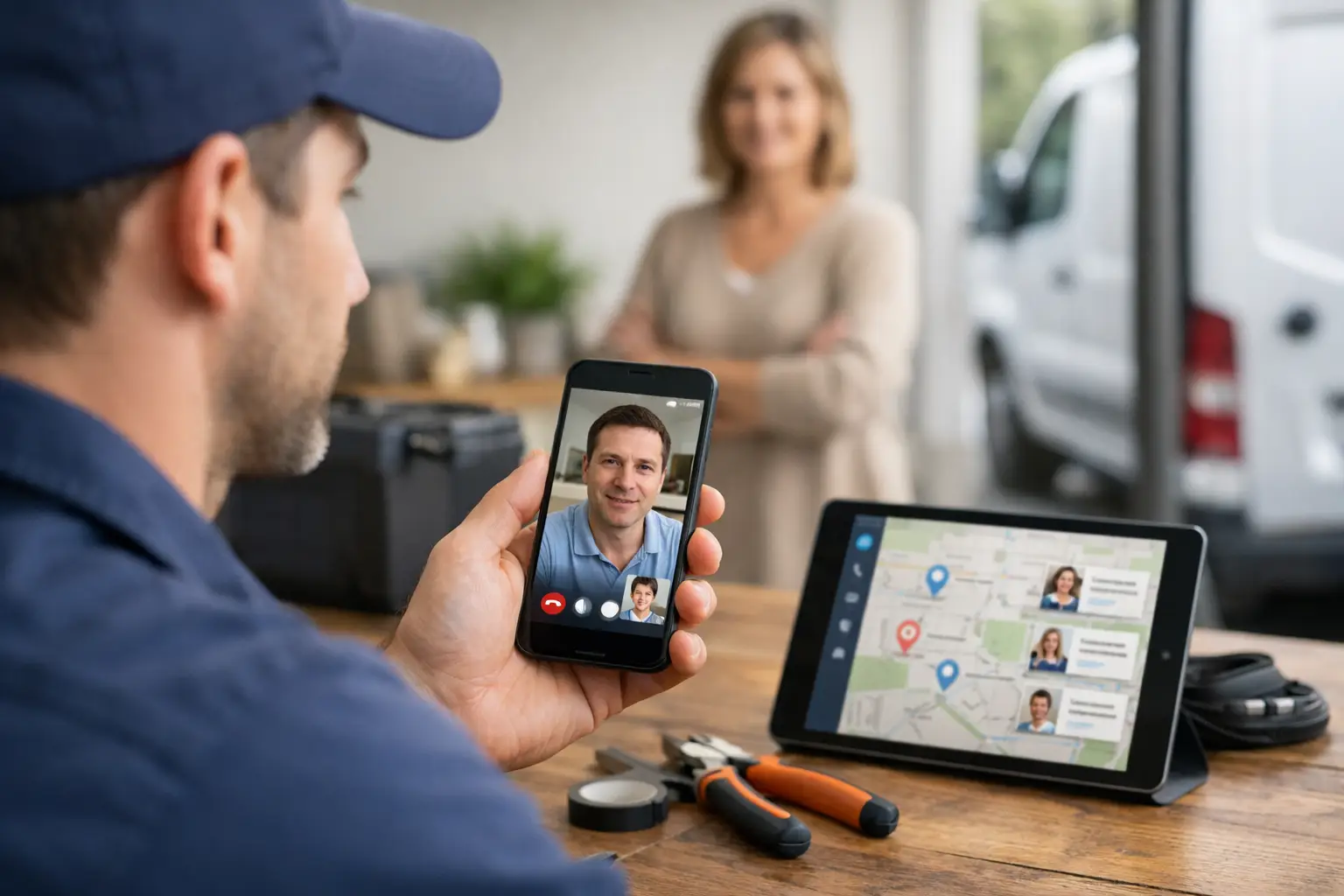
You miss one Thumbtack lead while you're inside a job, and by the time you call back, the customer already booked someone else. That is exactly where a home service communication app earns its keep. For solo operators and small crews, the problem usually is not lead quality. It is response time, scattered messages, and too much admin work happening in the middle of real service work.
If you run a cleaning business, plumbing shop, HVAC crew, lawn care route, or electrical service, communication is not a side task. It is the sales process. The call you miss, the text you forget to answer, or the voicemail you never get around to returning can cost you a booked job. Good software should fix that without making your day harder.
What a home service communication app is really for
A lot of tools say they help you "manage customer communication," but that phrase can mean almost anything. In practice, a home service communication app should do one thing very well: help you catch, answer, and move every lead toward a booking.
That sounds simple, but it breaks down fast in the field. Leads can come from Yelp, Angi, Thumbtack, Google Local Services Ads, direct calls, website forms, Facebook messages, and plain old text. If each one lands in a different place, your follow-up becomes guesswork. You end up checking five apps, missing two conversations, and replying late to the hottest lead of the day.
For small operators, the best app is not the one with the most features. It is the one that reduces friction. If you can open your phone, see every incoming lead in one place, and respond fast, you're already ahead of a lot of competitors.
The real cost of slow replies
Most home service businesses do not need more leads first. They need to stop leaking the leads they already paid for.
That is especially true on marketplace platforms where customers contact multiple providers at once. The first useful reply usually has the edge. Not the fanciest reply. Not the longest one. Just the first clear response that answers the question and gives the customer a next step.
This is where many owners get stuck. When you're driving, cleaning a house, fixing an AC unit, or working through a full schedule, you cannot stop every few minutes to type custom responses. But if you wait until the evening, the lead has gone cold.
A good communication app cuts that delay. It helps you reply quickly, keep the conversation moving, and avoid the pileup that happens when every channel runs separately.
What to look for in a home service communication app
Start with the inbox. If calls, texts, web leads, and marketplace inquiries are not visible in one place, you are still doing manual follow-up work. The whole point is to make your day simpler, not to give you another dashboard to babysit.
Next, look at speed. Can the app help you respond in seconds, not hours? That might mean templates, smart automations, or AI-assisted replies. The trade-off is that automation has to sound human enough to keep trust. A fast reply is helpful only if it feels relevant and moves the customer toward scheduling.
Phone handling matters too. Plenty of home service leads still start with a call, especially for urgent work. If you miss the call and there is no backup, you are relying on the customer to leave a voicemail and wait. Many will not. A stronger setup gives you a business number, handles inbound calls professionally, captures the lead details, and lets you follow up without starting from scratch.
Booking is another big one. If the conversation ends with "Call me later" or "Let me check my calendar," jobs stall out. The better path is simple scheduling built into the flow, so a lead can move from first contact to confirmed appointment without three extra back-and-forth messages.
And if your business or staff work in both English and Spanish, bilingual communication is not a bonus feature. It is basic coverage. If the app only works well in English, it creates friction for a large share of the real market.
Simple beats feature-heavy for small teams
There is a big difference between software made for enterprise service companies and software that actually works for a two-person team.
Larger systems often include dispatch boards, layered permissions, long setup processes, and training requirements that make sense for bigger operations. For a solo cleaner or owner-operator plumber, that stuff can slow adoption more than it helps. If you need a demo, onboarding call, and a week of setup just to answer leads, it is too much.
This is why usability matters more than feature count. A practical app should be easy enough to use from your phone between jobs. You should not need to "implement" it like a big company would. You should be able to turn it on, route your leads, and start catching more of them right away.
That also means support matters. Small business owners often avoid software because they assume setup will be confusing. Fast, hands-on help changes that. Short walkthroughs, direct support, and clear next steps usually matter more than a giant knowledge base nobody has time to read.
Bilingual communication is a business advantage
In home services, a lot of owners and staff are Spanish-first, bilingual, or serving customers in both languages. Most software still treats that like an edge case. It is not.
If your tools make it harder to answer in Spanish, follow up in Spanish, or handle calls in Spanish, you create delays and missed opportunities. That affects not only customer experience but your own team's confidence using the system.
A communication app that works fully in English and Spanish helps in very practical ways. It reduces mistakes, speeds up replies, and makes the software more usable for the people actually doing the work. For small businesses, that can be the difference between using a tool daily and abandoning it after a week.
AI can help, but only if it saves real time
There is a lot of noise around AI right now, and some of it is deserved. Not every home service business needs advanced automation. But there are a few places where AI can make an immediate difference.
The first is instant lead response. If a new inquiry gets a smart reply in under a minute, you have a much better chance of keeping the customer engaged. The second is call handling. If an AI voice can answer missed calls, collect job details, and route the next step, you are no longer losing every lead that comes in while you are on-site. The third is summarizing conversations, so you do not have to replay voicemails or hunt through threads to remember what the customer wanted.
Still, it depends on execution. If AI replies sound generic or miss the customer's actual request, they can hurt trust. If the voice system feels clunky, callers may hang up. The test is simple: does it help you book more jobs with less effort? If yes, it is useful. If it just adds complexity, skip it.
A website is not always the first priority
A lot of small home service businesses think they need a full website before they need better communication. Sometimes that is true. Often it is not.
If most of your leads come from Google, referrals, directories, social media, or marketplace apps, your bigger problem may be what happens after the click or call. A simple public business profile that captures leads, works on mobile, and can be shared anywhere may do more for you right now than a traditional multi-page site.
That is especially true if it connects offline marketing too. A QR code on a flyer, business card, yard sign, or van magnet can turn real-world attention into direct inquiries without making people search for you later.
The best app is the one you will actually use
There is no perfect home service communication app for every company. A larger HVAC operation may need dispatch-heavy software. A solo cleaner may need something much lighter. A plumbing business with lots of urgent calls may care more about phone coverage than web forms. Your best choice depends on where your leads come from and where you are currently losing them.
But the baseline is clear. You need one place for conversations, faster replies, easier booking, and less admin work in the field. If the app can do that from your phone, in the languages your business actually uses, it is solving the right problem.
That is why platforms like GigConvert are gaining traction with small service businesses. They focus less on bloated software and more on what owners actually need: catch every lead, reply fast, and turn conversations into booked jobs.
If your current setup still has you switching between missed calls, text threads, lead apps, and sticky notes, you do not need more hustle. You need a simpler system that keeps up with the way home service businesses really work.