
Calendar Booking for Home Services That Works
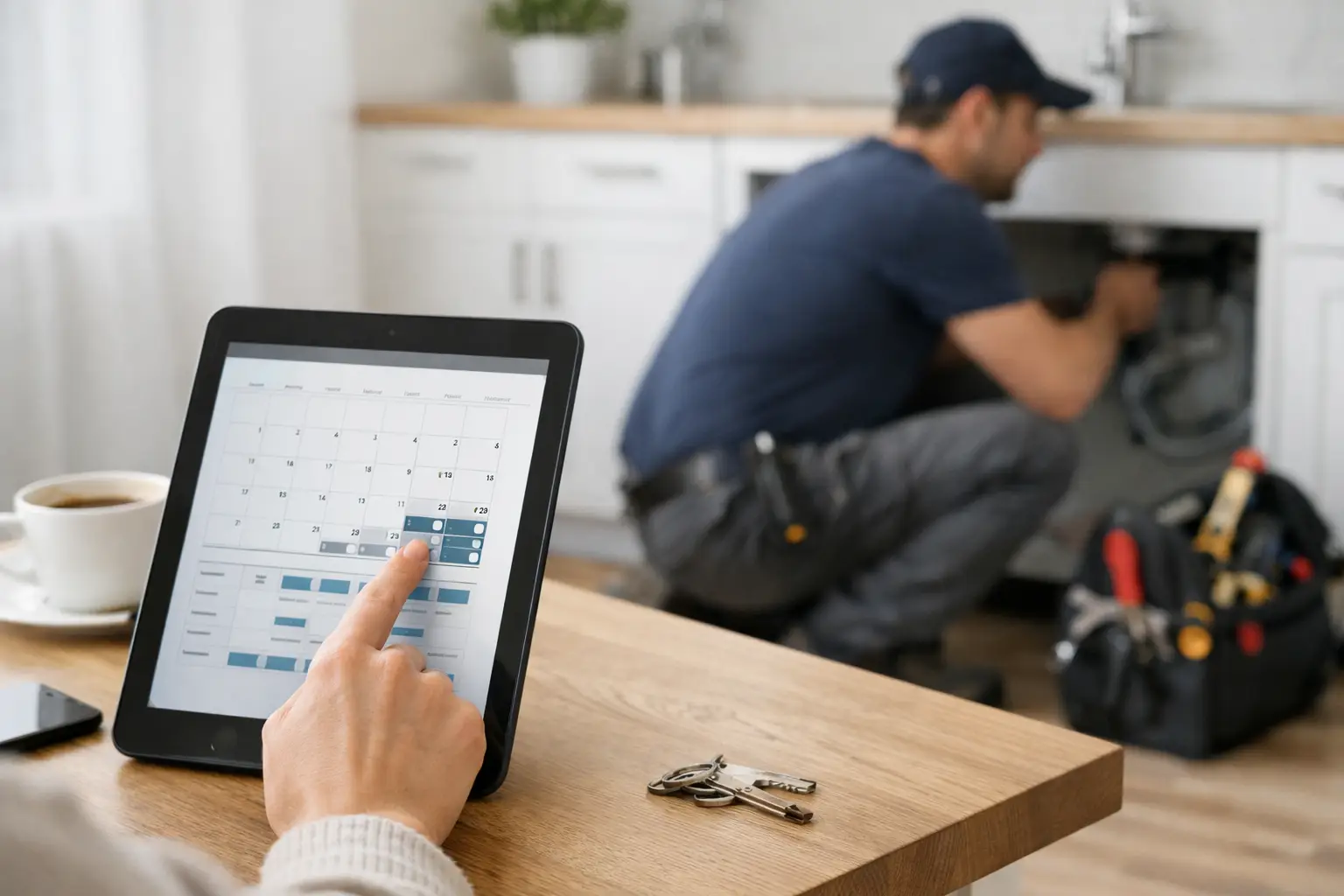
A missed call at 2:17 p.m. should not turn into a lost job by 2:25.
That is the real value of calendar booking for home services. It is not about adding another app to your phone or making your business look fancy. It is about giving customers a fast way to choose a time, while you are cleaning a house, driving to a quote, or finishing a repair. When people are ready to hire, speed matters. If they cannot book you quickly, they move on.
For solo operators and small crews, that back-and-forth is expensive. One customer texts asking for Friday. You reply an hour later. They ask, morning or afternoon. You respond after the next job. By then, they already booked someone else. That happens every week in home services, and most owners do not notice how much revenue slips out through scheduling friction.
Why calendar booking for home services matters
In home services, customers usually want three things right away. They want to know if you serve their area, what the job might cost, and when you can come. If your process handles the first two but makes the third hard, you still lose leads.
Calendar booking solves that by shortening the path from interest to appointment. Instead of waiting for you to call back, the customer sees available times and picks one. That does not mean every business should hand over the whole calendar with no rules. It means your availability should be easy to access and easy to act on.
This matters even more if your leads come from places like Thumbtack, Angi, Yelp, Google, referrals, or text messages. Those leads are often shopping fast. They are messaging two or three providers at once. The business that answers first and makes booking easiest usually gets the job.
There is also an operations benefit. Good booking does not just help the customer. It reduces interruptions during your day. Fewer texts. Fewer voicemails. Fewer half-finished conversations you meant to follow up on later.
What good booking looks like in the field
A lot of scheduling tools are built for office teams, not for people moving from job to job. That is why some systems feel bloated. They ask for too many settings, too many clicks, and too much maintenance.
Calendar booking for home services should be simple enough to run from your phone. A customer should be able to request or confirm a time in under a minute. You should be able to control service hours, travel windows, buffer time, and which job types can be booked without getting stuck in setup.
The best setup usually includes a few practical rules. You may want separate time windows for estimates and full jobs. You may need padding between appointments because traffic is real. You may want to limit same-day bookings unless the work is urgent. Those details matter because a calendar that looks open but creates bad route planning can hurt more than help.
For example, a solo cleaner may allow instant booking only for recurring maintenance cleanings inside a specific zip code, while one-time deep cleans require approval. A plumber might allow emergency requests after hours but keep standard installs inside fixed weekday slots. The point is not to automate everything. The point is to automate the part that saves time without creating chaos.
The biggest mistake owners make
The most common mistake is treating booking like a website feature instead of a revenue system.
If your calendar link exists but is buried in one place, it will not do much. Customers need to find it wherever they already contact you: text, missed-call follow-up, social media, Google profile, lead replies, QR codes, and your public business page. The easier it is to access, the more jobs it books.
The second mistake is showing too much availability without enough qualification. Not every lead should be allowed to grab any slot. If someone needs a price first, lives outside your area, or wants a service you do not offer, direct booking can waste your schedule. Good booking starts with basic qualification, then offers the right next step.
That might be a confirmed job, an estimate appointment, or a call. It depends on your service and how standardized your work is.
How to set up calendar booking for home services without making your day harder
Start with your real schedule, not your ideal one. If you usually work from 8 to 5 but never want a new appointment at 4:30 across town, do not pretend that slot is available. Build around how you actually operate.
Next, decide which appointments can be booked instantly and which need review. Repeat work and simple jobs are easier to automate. Large projects, uncertain pricing, and wide service areas usually need a quick qualification step first.
Then add buffer time. Small businesses often skip this because they want every possible booking. In practice, no buffer means late arrivals, stressed customers, and rushed work. A calendar should protect your day, not fill every inch of it.
After that, make sure your booking flow collects the information you need to show up prepared. At minimum, ask for the address, service type, preferred timing, and best contact method. If photos help you quote faster, ask for them upfront. If pets, gate codes, or access instructions matter, gather that too.
Finally, test the experience from your customer's side. Open the booking flow on your phone. See how many taps it takes. Read every message. If anything feels confusing to you, it will feel worse to a busy customer.
Where booking fits into your lead response process
Booking is strongest when it sits inside a faster response system.
If a new lead comes in and waits two hours for an answer, the calendar does not fix that delay. But if the lead gets a quick reply that answers basic questions and gives them a path to book, conversion goes up. That is where many small operators get stuck. They do not need more leads first. They need fewer delays between inquiry and appointment.
This is especially true for bilingual businesses. If a customer reaches out in Spanish and your process only works well in English, you create friction right away. The same goes for phone calls. A lot of home service leads still call first. If nobody answers and there is no fast way to capture the job, the lead cools off.
That is why the best systems combine inbox, phone, and booking in one place. When replies, call handling, and scheduling work together, fewer leads fall through the cracks. That can matter more than any marketing campaign.
It depends on your service type
Not every home service business should use calendar booking the same way.
Cleaning companies often benefit the most from direct scheduling because many jobs fit repeatable time windows and service packages. Lawn care can also work well with structured booking, especially for recurring routes.
Electrical, HVAC, and plumbing businesses may need more controlled booking because job complexity varies. In those cases, the right move is often booking an estimate, inspection, or callback window rather than the full job itself. This still saves time because the customer is committing to the next step instead of waiting in limbo.
If you have a very small team, be careful about over-automation. It is tempting to open lots of slots to capture more demand. But if one tech calls out or a job runs long, your whole day can unravel. A slightly tighter calendar usually performs better than a wide-open one you cannot reliably honor.
What to look for in a booking tool
Skip the flashy extras. For most home service businesses, the basics decide whether a tool helps or becomes one more thing to manage.
You want mobile-friendly scheduling, simple availability controls, lead capture before booking, confirmations and reminders, and an easy way to share the booking page anywhere customers already find you. If you serve English- and Spanish-speaking customers, bilingual support matters too. That is not a bonus feature for many operators. It is basic usability.
It also helps if the setup is guided. A lot of small business owners do not need more software. They need something they can start using fast, with clear help if they get stuck. That is one reason platforms like GigConvert make sense for field operators. The goal is not to turn you into an admin person. The goal is to help you catch the lead, book the job, and move on.
The real payoff
Better booking does not just save a few messages. It changes how your business feels day to day.
You stop wondering which leads you forgot to answer. Customers stop waiting on simple scheduling questions. Your calendar becomes a working part of sales, not a private note on your phone. And because the process is faster, you usually book more of the leads you already have before spending money to chase new ones.
If your schedule still depends on missed calls, scattered texts, and mental notes, fix that first. The businesses that grow are not always the ones with the most leads. They are often the ones that make it easiest to say yes.