
AI Receptionist vs Voicemail for Service Pros
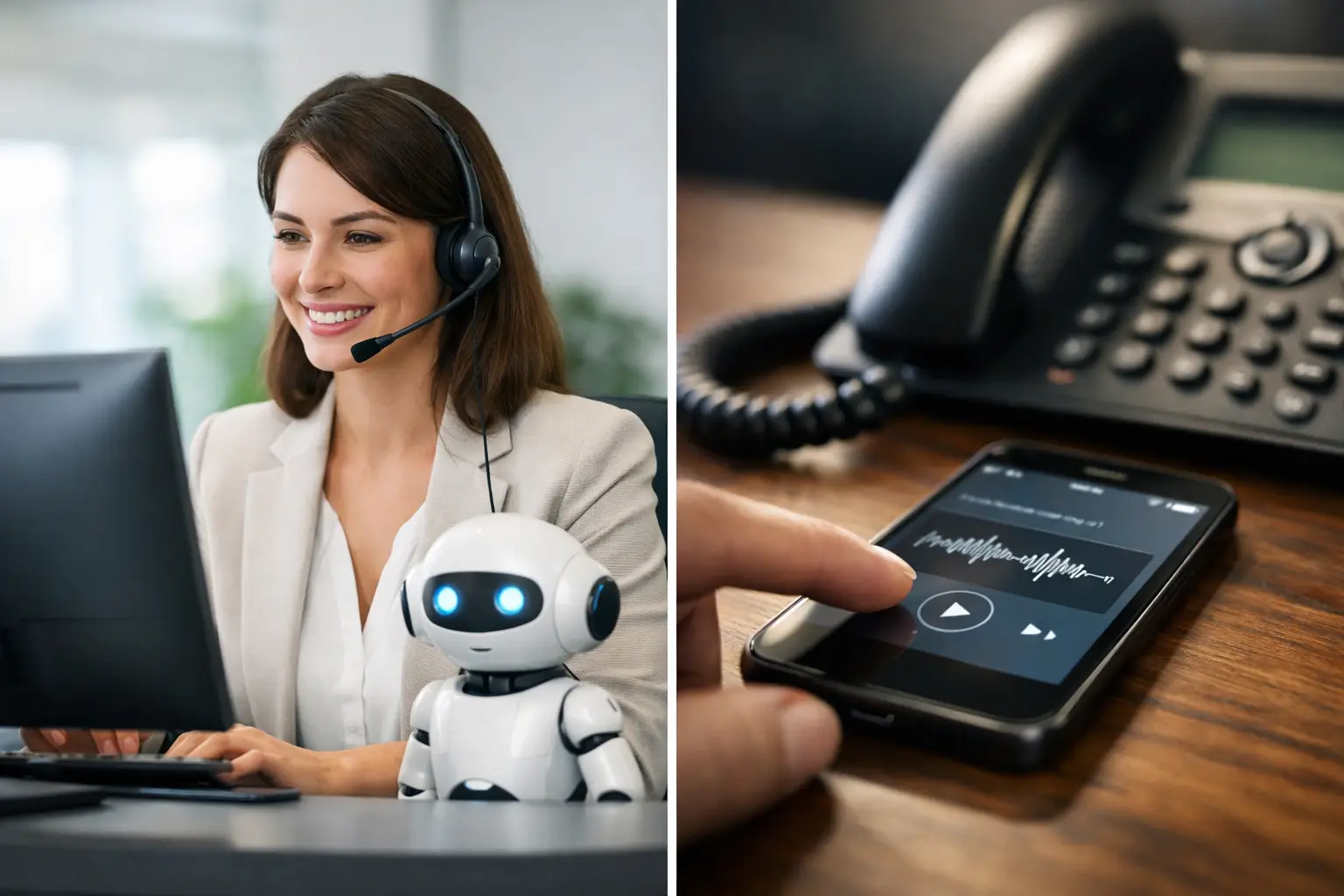
A missed call at 11:40 a.m. does not wait for you to finish the bathroom deep clean, wrap the HVAC install, or get back to the van. It usually goes to the next company. That is the real issue behind ai receptionist vs voicemail - not technology for technology’s sake, but whether your phone system helps you win jobs while you are still out working.
For solo operators and small service teams, voicemail feels cheap and familiar. It is already there, and it does not ask you to change how you work. But familiar does not always mean effective. If your business depends on speed, especially from Google, Yelp, Thumbtack, Angi, referrals, or yard signs, the gap between voicemail and an AI receptionist can show up fast in your booked calendar.
AI receptionist vs voicemail: what changes in real life?
Voicemail takes a message. An AI receptionist answers the call, talks to the customer, asks follow-up questions, and can move the job forward.
That difference matters because most leads are not calling to leave a thoughtful message. They want to know three things right away: do you serve their area, can you do the job, and how soon can you get there. Voicemail pushes all of that into a delay. The customer talks, waits, and hopes you call back.
An AI receptionist keeps the conversation going while the customer is still paying attention. It can greet them, collect their name, job type, address, timing, and urgency. In many setups, it can also offer available booking times or pass you a clean summary so you know who is worth calling first.
If you are a cleaner, plumber, electrician, or lawn care operator working in the field, that means fewer random callbacks and more context before you respond. Instead of listening to five voicemails that say, "Call me back," you get structured lead details that help you act quickly.
Why voicemail loses more jobs than most owners realize
Voicemail is not useless. It is better than letting the phone ring forever. But it asks too much from the customer and too much from you.
First, many people do not leave messages anymore. They hang up and try the next provider. That is especially true when the job feels urgent or they found you through a lead marketplace where several pros are one tap away. A voicemail box does not reassure them that anyone is actually available.
Second, voicemail creates a pile-up. At the end of a busy day, you still have to listen, decode names and addresses, decide who sounds serious, and start calling back. Some numbers go to voicemail again. Some leads have already booked elsewhere. Some forgot why they called.
Third, voicemail does not qualify. It does not ask if the home is inside your service area, whether the customer wants recurring cleaning or a one-time move-out, whether the property is occupied, or whether the caller needs same-day help. So every callback starts from zero.
That creates hidden admin work. It also makes you slower, and speed is often the whole game.
Where an AI receptionist earns its keep
An AI receptionist is not just answering calls so you sound bigger. The main value is operational. It reduces lead loss when you cannot get to the phone.
If your business gets calls during jobs, on weekends, after hours, or while driving between appointments, an AI receptionist covers the gap. It can answer right away, speak with the customer in a natural back-and-forth, and capture the details you need. For many small businesses, that alone improves response time enough to lift bookings.
The second benefit is consistency. A customer calling at 2 p.m. gets the same fast, helpful experience as a customer calling at 8:30 p.m. You are not depending on whether you remembered to check voicemail or whether you were too busy to call back before dinner.
The third benefit is qualification. Good AI call handling can sort out basic fit before the lead ever hits your inbox. That means fewer dead-end callbacks and better use of your time.
For bilingual service businesses, there is another clear advantage. If some of your customers prefer English and others prefer Spanish, a bilingual AI receptionist can answer both without forcing the conversation into one language. That is a practical difference, not a cosmetic one. It helps customers feel understood right away and keeps you from losing leads because of language friction.
AI receptionist vs voicemail on lead quality
Not every missed call is a good lead. That is why lead quality matters as much as lead volume.
Voicemail captures whatever the caller decides to leave, which may be almost nothing. An AI receptionist can ask the same questions every time, so you get cleaner information. What service do they need? What zip code are they in? Is this for today, this week, or just pricing? Are they a homeowner, renter, or property manager?
That makes follow-up sharper. You are no longer calling blind. You know which leads are urgent, which ones are local, and which ones are not a fit. For a small team, this can be the difference between feeling buried and feeling in control.
There is a trade-off, though. If the AI is poorly configured, it can feel stiff or ask too many questions. That can frustrate callers. The goal is not to build a giant phone tree with fake friendliness. The goal is to keep the conversation short, useful, and easy for the customer.
Cost is not the only comparison
A lot of owners start this conversation with price. Voicemail is basically free. An AI receptionist costs money. That part is obvious.
The better question is what one missed job is worth to you. If an average cleaning visit is worth a few hundred dollars, or a plumbing repair is worth much more, losing even a small number of inbound calls each month can cost more than the tool meant to catch them.
That said, not every business needs the same setup. If your phone rarely rings and almost all your work comes from repeat clients by text, voicemail may be enough for now. If you are actively trying to grow, buying leads, or depending on inbound calls from Google and referrals, voicemail becomes a weak handoff point very quickly.
Think about your current volume and your current response gaps. The right system is the one that closes the gap without adding complexity you will never use.
Who should stick with voicemail for now?
There are cases where voicemail is still fine. If you are a one-person operation with a stable client base, low call volume, and no pressure to respond instantly, voicemail may be good enough. The same is true if you personally answer most calls and use voicemail only as a backup.
It can also work if your service is very relationship-driven and almost all calls come from existing customers who already know your process. In that case, a missed call is less likely to turn into a lost opportunity.
But if you are paying for lead marketplaces, trying to book new jobs every week, or missing calls during work hours, voicemail is usually not keeping up with the way customers shop.
Who benefits most from an AI receptionist?
The strongest fit is a home service business that gets inbound calls while actively working and cannot stop every time the phone rings. That includes cleaners in the field, remodelers on job sites, landscapers on crews, and repair businesses handling urgent requests.
It is especially helpful when call speed affects close rate. If a customer is comparing three companies right now, the business that answers first has a real edge. An AI receptionist helps you stay in the conversation while your hands are busy.
It also makes sense for businesses serving mixed-language neighborhoods. A bilingual setup can answer in English or Spanish and collect the same lead details either way. For many owners, that removes a major blind spot in their intake process.
This is where a tool like GigConvert fits naturally - not as extra software to babysit, but as a simple way to answer calls, qualify leads, and keep everything in one place without making the business more complicated.
The real choice is speed versus delay
When owners compare ai receptionist vs voicemail, they often frame it as automation versus the old-school way. That is not quite right. The real choice is speed versus delay.
Voicemail delays the conversation. An AI receptionist continues it.
That does not mean AI is always better in every situation. If your business is small, steady, and mostly repeat work, voicemail may be enough. But if your growth depends on catching new leads fast, the old setup can quietly cost you more than it saves.
The best phone system for a small service business is not the fanciest one. It is the one that makes it easy for customers to reach you, easy for you to know who is calling, and easy to turn interest into booked work. If your current voicemail cannot do that, the next missed call is probably giving you your answer.